Market
Youngjin Pharmaceutical gets 43% of sales from products it buys and resells, and is betting on an antibiotic plant; Kyungbo Pharmaceutical’s API exports have been cut in half, and it is investing 85.5 billion won in an ADC plant

Youngjin Pharmaceutical and Kyungbo Pharmaceutical, which share roots in cephalosporin antibiotics, each posted operating profit in the 3 billion-won range last year, but the gap in their market capitalizations widened to 88 billion won.
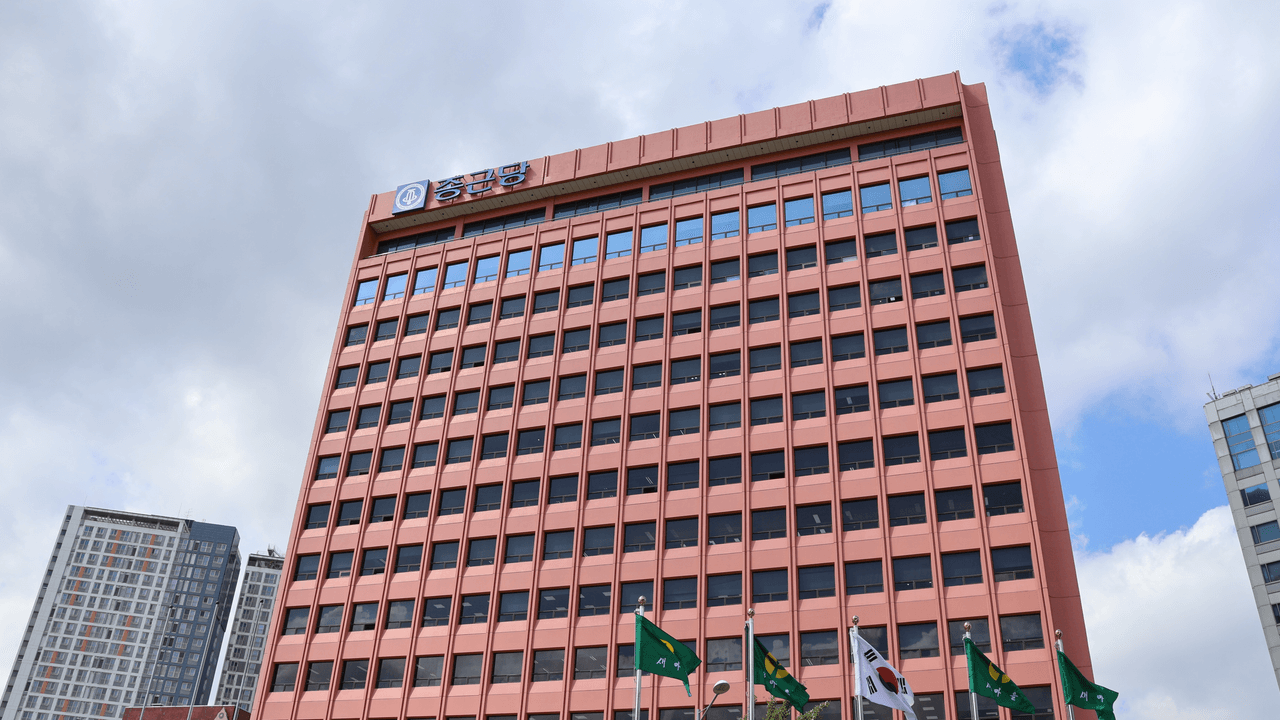
According to the Financial Supervisory Service’s electronic disclosure system on the 30th, Youngjin Pharmaceutical recorded 254.3 billion won in sales and 3.4 billion won in operating profit in 2025, while Kyungbo Pharmaceutical posted 264.1 billion won in sales and 3.5 billion won in operating profit. Both are listed pharmaceutical companies with holding companies as their largest shareholders. KT&G holds 52.45% of Youngjin Pharmaceutical, while Chong Kun Dang Holdings holds 60.56% of Kyungbo Pharmaceutical, including shares held by related parties.
Their report cards overlap, but the structures through which they make money have diverged completely.
A breakdown of Youngjin Pharmaceutical’s 2025 sales shows that merchandise sales totaled 110.557 billion won, accounting for 43.5%. Sales of products manufactured directly by the company amounted to 87.421 billion won, or just 34.4%. The company relies more on introducing and selling products from other pharmaceutical companies than on products it manufactures itself.
In addition, processing fees received for manufacturing other companies’ medicines totaled 50.368 billion won, accounting for 19.8%. Sales from medicines bearing the company’s own name amounted to just over one-third of total sales.
By region, domestic sales totaled 231.548 billion won, or 91.1%. Overseas sales stood at 22.708 billion won, or 8.9%, of which sales to Japan accounted for 18.792 billion won.
By therapeutic class, antibiotics were the largest category at 50.943 billion won, accounting for 20%. The enteral nutrition product Hamonilan generated 38.18 billion won, or 15%, while cardiovascular products, including treatments for hypertension and hyperlipidemia, generated 36.755 billion won, or 14%. Fibro, a treatment for idiopathic pulmonary fibrosis, generated 7.784 billion won.
Kyungbo Pharmaceutical is closer to a company that manufactures and exports active pharmaceutical ingredients than one that sells finished products. Of its cumulative sales of 192.888 billion won through the third quarter of 2025, APIs accounted for 98.871 billion won, or 51.2%. Finished pharmaceuticals totaled 91.227 billion won, or 47.3%.
Within its API business, general APIs accounted for 40.566 billion won, cephalosporin APIs for 27.623 billion won and anticancer APIs for 5.992 billion won. The company presents its experience handling highly toxic substances in the production of anticancer APIs as the foundation for its new business.
Exports accounted for 19.0%, or 36.589 billion won. Transactions are concentrated in Japan and the United States. Compared with Youngjin Pharmaceutical’s overseas sales share of 8.9%, the proportion is more than twice as high.
The intensity of research and development spending also differs. Youngjin Pharmaceutical invested 12.1 billion won in 2025, equivalent to 4.77% of sales, while Kyungbo Pharmaceutical had spent 16.168 billion won through the third quarter alone, representing 8.38%. The companies had 55 and 108 research personnel, respectively.
The facilities the two companies have selected as their next growth drivers also differ in character.
Youngjin Pharmaceutical built an antibiotic injectable facility at its Namyang plant in Hwaseong, Gyeonggi province. Construction began in September 2022, and the facility received approval for completion in December 2024. At full operation, it can produce 20 million vials annually, up 2.5-fold from the previous capacity of 8 million vials. The company plans to use the facility to expand exports beyond Japan into China and Southeast Asia.
Operating rates vary sharply by line. In 2025, the operating rate of the Namyang plant’s powder-injection line was 198.6%, running at nearly twice the facility’s capacity. By contrast, the operating rate of the cephalosporin tablet line was just 8.3%.
Kyungbo Pharmaceutical is investing 85.5 billion won in antibody-drug conjugate (ADC) contract development and manufacturing. The facility, to be built on the site of its existing plant in Asan, South Chungcheong province, represented 60% of shareholders’ equity and 40% of the previous year’s sales when the investment was decided. In December last year, the company opened an 885-pyeong ADC research center in Yongin, Gyeonggi province, establishing a system for producing preclinical samples.
The Asan good manufacturing practice (GMP) plant is targeted for completion in the fourth quarter of 2026, with clinical-sample production scheduled to begin in the third quarter of 2027. It is designed to process 2.5 kg of API or 25,000 vials of finished product per batch. The company has set a target of 1 trillion won in ADC CDMO sales in 2033, highlighting a structure that handles everything from linker and payload synthesis through GMP manufacturing at a single site. The ADC CDMO market is projected to grow from $9.3 billion in 2024 to $36 billion in 2033.
The erosion of its core business is behind Kyungbo Pharmaceutical’s large-scale investment. API exports fell from 100.4 billion won in 2020 to 53.2 billion won in 2024, roughly half their previous level. Volumes supplied to Japanese customer Yakuin also declined from 34.7 billion won to 19 billion won.
Volumes also declined in China. On April 10, Kyungbo Pharmaceutical disclosed the termination of an 8.87 billion-won API supply agreement with China’s Guangdong Landu Pharmaceutical. The contract, which had been scheduled to run through December 2027, ended 1 year and 8 months early, and the company cited “changes in Chinese pharmaceutical market policies and price declines” as the reason. The agreement was terminated following notification by the counterparty.
For Youngjin Pharmaceutical, the issue is the time lag between completing the facility and realizing sales. On the 24th, the company amended its disclosure concerning the new facility investment. Pharmaceutical facilities must receive GMP approval from the Ministry of Food and Drug Safety before products can be sold, even after construction is complete, creating a gap between completion and operation. Industry sources say, “Recently, the larger the facility investment aimed at the global market, the more companies are allowing ample time to overcome regulatory barriers at the global level.”
The investment burden appeared first on the financial statements. At the end of 2025, Youngjin Pharmaceutical had total liabilities of 170.9 billion won and total equity of 91.5 billion won, resulting in a debt-to-equity ratio of 186.9%. It had an accumulated deficit of 19.1 billion won.
The pace accelerated in 2026. First-quarter sales totaled 63.759 billion won, including 59.034 billion won in domestic sales and 4.725 billion won in exports. The company posted a net loss of 2.3 billion won during the same period, swinging from net income of 1 billion won in the year-earlier quarter. Given that its full-year net loss in 2025 was 230 million won, the loss expanded tenfold in just one quarter.
Cash also declined rapidly. Cash and cash equivalents fell to 6.3 billion won at the end of the first quarter from 28.4 billion won at the end of last year.
Youngjin Pharmaceutical has another card besides its facilities: KL1333, a treatment for mitochondrial rare diseases. Under a technology-export agreement worth a total of $57 million (approximately 82 billion won), the company has received $4.4 million (approximately 6.3 billion won) to date, with up to $52 million (approximately 74.9 billion won) remaining. The counterparty changed three times, from NeuroVive to Abliva and then to Pharming Technologies. The compound received orphan-drug designation from the U.S. Food and Drug Administration (FDA) in 2018 and fast-track designation in September 2023, and the global FALCON study is underway.
Market valuations of the two companies have diverged in the opposite direction from their operating results. As of the 29th, Youngjin Pharmaceutical had a market capitalization of 207.4 billion won and a share price of 1,134 won. Its price-to-book ratio (PBR) was 2.34 times, based on a book value per share (BPS) of 486 won.
Kyungbo Pharmaceutical had a market capitalization of 119.4 billion won and a share price of 4,995 won. Its BPS was 6,036 won, putting its PBR at just 0.83 times. In other words, it trades below its net asset value.
Neither stock has performed well. Youngjin Pharmaceutical’s 52-week high and low were 2,320 won and 1,081 won, respectively, while Kyungbo Pharmaceutical’s were 9,300 won and 4,800 won. Both stocks remain near their 52-week lows.
In summary, Youngjin Pharmaceutical is maintaining sales through introduced products and contract manufacturing while counting on its antibiotic injectable facility and royalty inflows, whereas Kyungbo Pharmaceutical is seeking to replace declining API exports with ADC contract manufacturing. The operating rate of Youngjin Pharmaceutical’s antibiotic injectable facility and orders for Kyungbo Pharmaceutical’s Asan ADC plant will be the key points to watch in the next quarter.
BIOBOOK TEAM
biobookmedia@biobook.co.kr
ViOL Medical Wins Thai Approval for HIFU Device, Laying Groundwork for Consumables Revenue
SCD Pharm’s glaucoma drug Latast reaches 11% market share, supplied back to originator
Alteogen’s ALT-B4 Infringes Halozyme Patent in Europe; Keytruda SC Sales Banned in 8 Countries
Immunology Drug Developer TrexBio Prices $117 Million IPO
CKD’s third-generation Lee Ju-won becomes second-largest shareholder as new drug R&D faces a test
HLB Makes Fourth Bid for Liver Cancer Drug Approval; Uncertainty Remains Despite Less Severe Inspection Outcome

Peptone nears end of two-year Lilly technology evaluation…follow-on deal could be pivotal
HLB Pharmaceutical Completes 60.8 Billion Won Rights Offering, Bets on New Hyangnam Plant as Management Participation Grows
Song Young-sook sells 86 billion won stake; buyer is daughter’s one-person company — Is a second round of Hanmi control battle looming?
