
Market
Regulatory changes allow approval through Phase 1 plus BE instead of 4 years of clinical trials<br>MFDS exempts 22 ingredient combinations from Phase 3 data based on meta-analysis

Hyundai Pharm, which is developing South Korea’s first four-drug combination for hypertension and hyperlipidemia, has voluntarily discontinued its approved Phase 3 trial and will pursue marketing approval through a shorter pathway.
Hyundai Pharm said March 26 that it had voluntarily discontinued the domestic Phase 3 clinical trial of its hypertension and hyperlipidemia combination drug, 'HODO-2224.' The Ministry of Food and Drug Safety (MFDS) revised its 'Guideline on Clinical Trials for Combination Drugs' to state that therapeutic confirmatory clinical trial (Phase 3) data may be exempted for combination drugs for hypertension and dyslipidemia containing an angiotensin II receptor blocker (ARB) or calcium channel blocker (CCB), together with a statin or ezetimibe.
Hyundai Pharm’s investigational 'HODO-2224' is a four-drug combination that combines the antihypertensive agents candesartan (ARB) and amlodipine (CCB) with the lipid-lowering agents rosuvastatin (statin) and ezetimibe. No four-drug combination containing candesartan, amlodipine, rosuvastatin and ezetimibe has yet been approved in South Korea, making it a new combination with significant market potential.
The basis for the guideline revision was the MFDS’ own meta-analysis. The MFDS collected reports of Phase 3 results related to hypertension and dyslipidemia combination drugs approved in South Korea from 2013 to 2024 and analyzed 22 ingredient combinations, 28 products and approximately 5,000 people. The analysis found that the antihypertensive and dyslipidemia treatments did not significantly affect each other’s therapeutic effects or safety. From the MFDS’ perspective, the accumulated data can already demonstrate efficacy.
Instead of continuing the planned 48-month Phase 3 trial, Hyundai Pharm has shifted to a strategy of applying for marketing approval based only on the results of a Phase 1 drug-drug interaction (DDI) study and a Phase 1 bioavailability (BE) study of the combination drug. The company discontinued the trial about a year after it began at Hanyang University Hospital in February 2025. By simple calculation, the approval timeline, previously scheduled to extend beyond 2028, could be moved up substantially.
However, this strategy comes with conditions. The MFDS states in the revised guideline that a therapeutic confirmatory clinical trial may still be required if the DDI study identifies a significant drug interaction and the agency determines that it could affect safety or efficacy. If the Phase 1 DDI results are unfavorable, the company may have to return to the Phase 3 pathway.
The decision comes as Hyundai Pharm is rapidly expanding its R&D investment. Hyundai Pharm’s research and development spending increased from 8.1 billion won in 2021 to 18.6 billion won in 2025, while its share of sales rose from 5.79% to 9.68% over the same period. In the first quarter of this year (December 2025 to February 2026), the company spent 4.271 billion won on research and development, equivalent to 9.2% of sales.
In addition to 'HODO-2224,' Hyundai Pharm is conducting a domestic Phase 2b trial of the type 2 diabetes drug 'HDNO-1605' and a Phase 3 trial of the cardiovascular combination drug 'BSDO-2301.' It has also submitted a marketing application for the oral contraceptive 'LINO-1713.'
The potential combined market for hypertension and dyslipidemia treatments targeted by HODO-2224 is estimated at approximately 640 billion won. With the regulatory threshold lowered, competitors developing combination drugs in the same class are also expected to submit marketing applications in succession, making how far ahead Hyundai Pharm can enter the market the key issue.
Biobook Team
biobookmedia@biobook.co.kr
Lotte Biologics Wins First Large-Scale Commercial Manufacturing Contract, Establishing Revenue Base
AstraZeneca’s new myasthenia gravis drug, cligepa, approved simultaneously in U.S. and EU
Biogen Invests $411 Million in Neurodegenerative Disease Drug Development
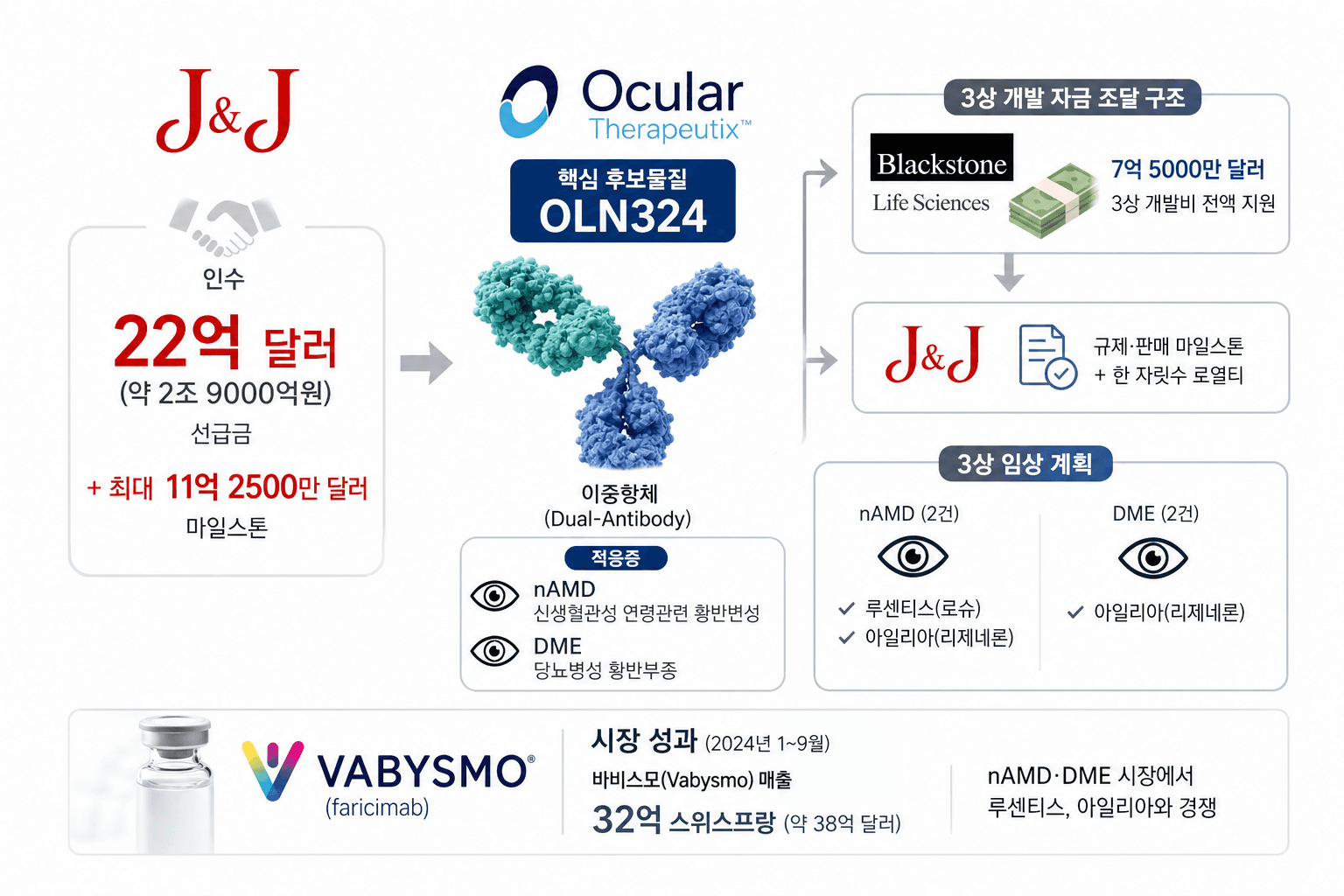
J&J to acquire Olin for $2.9 billion, taking on Roche’s Vabysmo
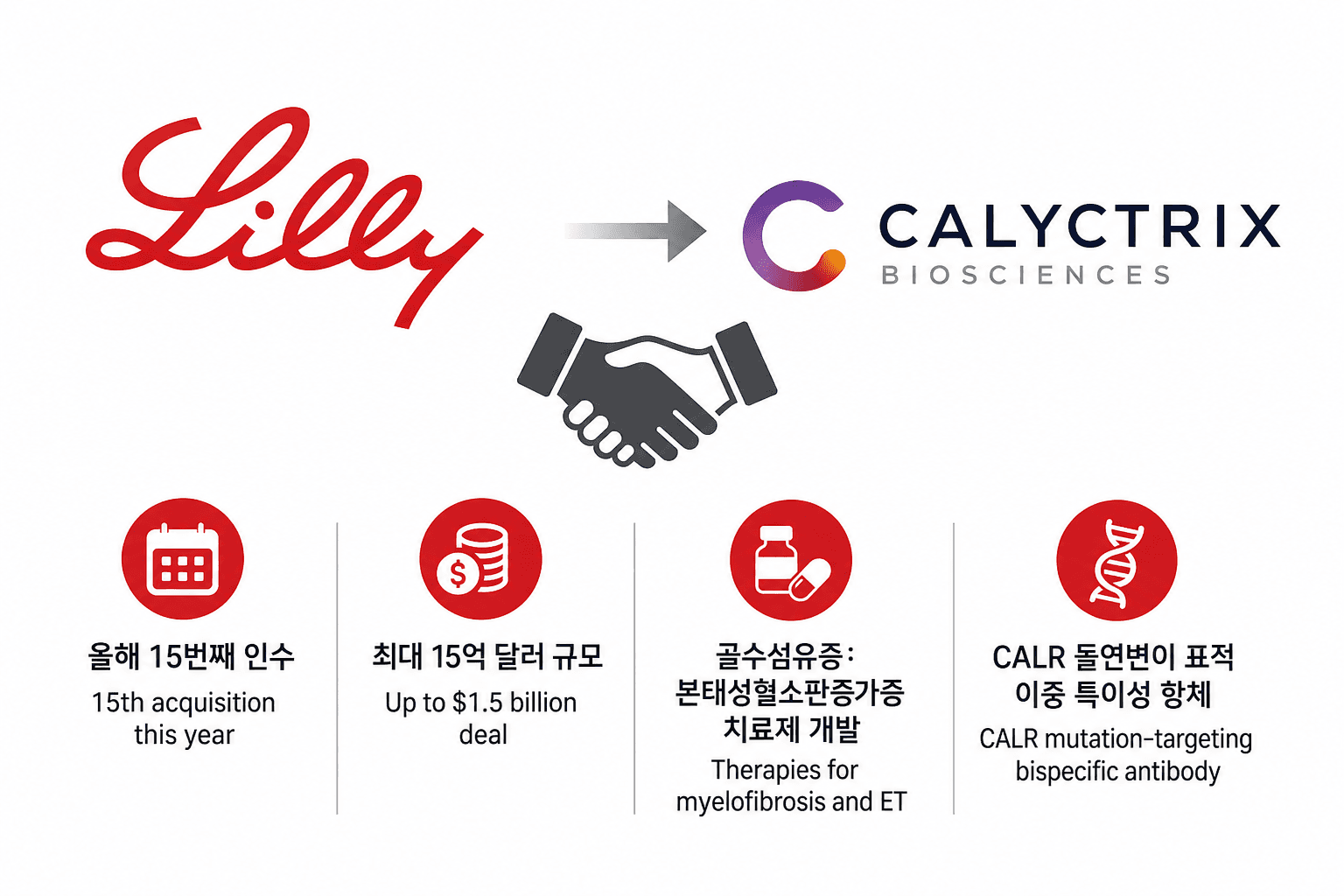
Lilly acquires rare blood cancer drug startup for up to $1.5 billion, its 15th deal this year
Seawolf Secures $100 Million and Signs $1.2 Billion DNA Therapeutics Deal With Sanofi


