
Science
Long-read sequencing raises detection of complex genetic variants by more than 30%<br>Studies identify specific neural circuits and links among the gut microbiome, brain and immune cells

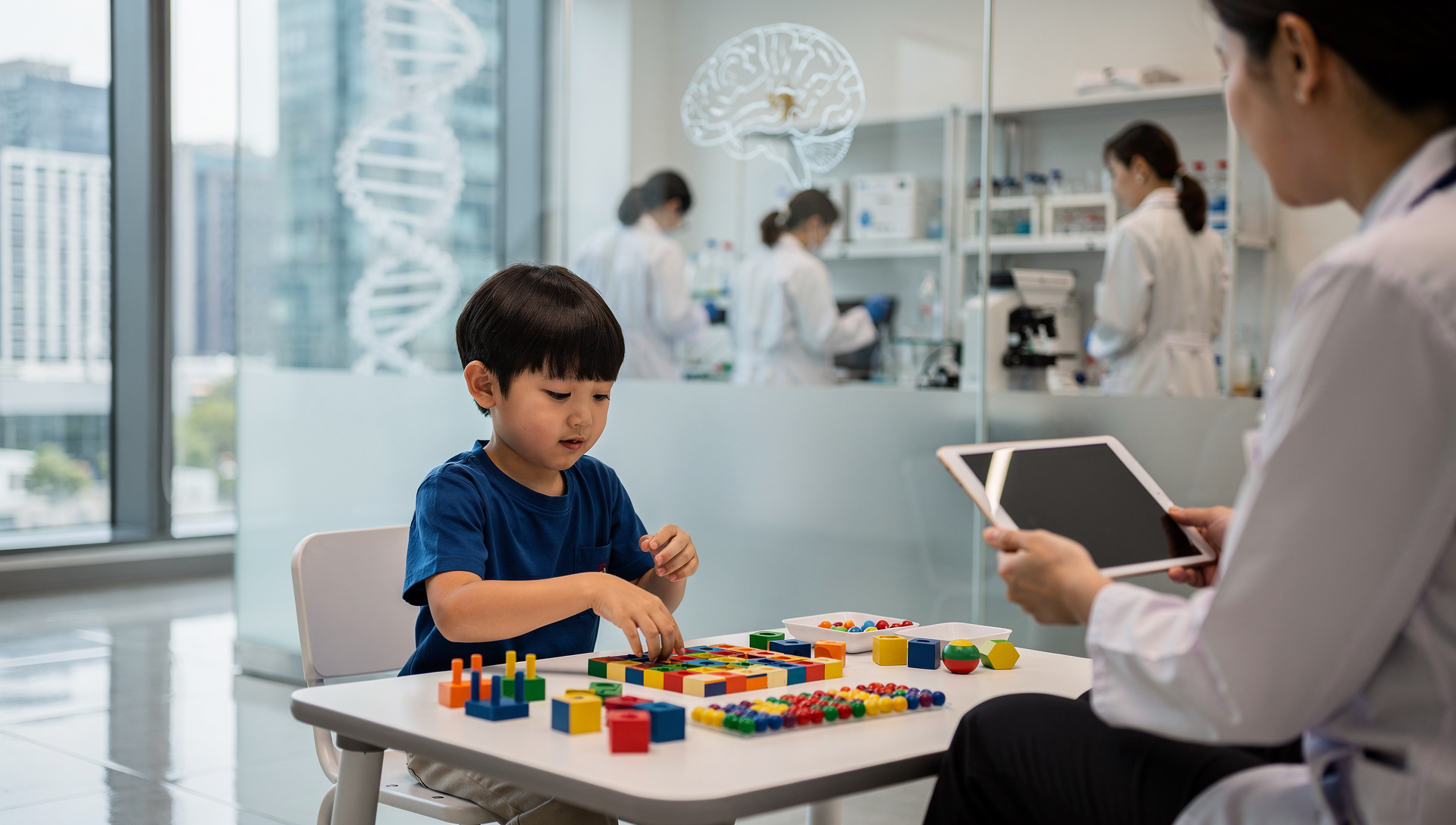
A series of studies investigating the complex biological causes of autism spectrum disorder (ASD) has raised expectations for the development of new diagnostic and treatment approaches.
According to BioOn and other foreign media outlets on the 29th, multiple global research teams have identified various mechanisms underlying autism through advances in genomic analysis technology and animal-model studies. In particular, the roles of genetic factors that have been difficult to detect with existing technologies, specific neural circuits and the gut-brain connection are becoming clearer.
A research team at the University of California San Diego published findings in the international journal Cell Genomics using long-read whole-genome sequencing. Unlike conventional short-read sequencing, this technology reads longer stretches of the genome, enabling more accurate detection of complex structural variants. The study found that detection of gene-disrupting structural variants increased by 33%, while detection of tandem repeat sequences increased by 38%.
Genetic research has also expanded to noncoding RNA regions that do not produce proteins. A research team at The Hospital for Sick Children in Toronto, Canada, reported in Nature that the long noncoding RNA PTCHD1-AS, located on the X chromosome, is closely associated with impaired social interaction and repetitive behaviors, core symptoms of autism. Disruption of this gene was found to increase the risk of autism in males by 2.56-fold.
The role of Shank3, considered a key gene associated with autism, has also been clarified. An international research team from Spain, China and other countries demonstrated in animal experiments, in a study published in Nature Communications, that mutations in the Shank3 gene block the vasopressin (AVP) pathway, known as the brain’s “social hormone” pathway. The researchers also suggested that activating a specific receptor could potentially restore social behavior.
A research team at the Shenzhen Institute of Advanced Technology, Chinese Academy of Sciences, reported in Science Advances that Shank3 mutations disrupt olfactory value coding—the ability to determine whether an odor is pleasant or unpleasant—in both humans and mouse models. The finding provides a neurological basis for the sensory abnormalities experienced by people with autism.
The connection between the gut microbiome and the brain is also becoming clearer. A research team at Pohang University of Science and Technology (POSTECH) in South Korea identified, in Nature Communications, a mechanism through which specific gut microorganisms influence autistic behaviors via CD4+ T cells, immune cells that reside in the brain. The researchers successfully improved social deficits in mice using a specific beneficial bacterium predicted by artificial intelligence.
Other studies have further highlighted autism’s complexity from multiple perspectives, including research that used brain organoids to identify specific cells associated with early brain overgrowth in people with autism (Cell Stem Cell), and research showing that genetic characteristics differ according to age at diagnosis (Nature).
These findings reaffirm that autism is a “spectrum” disorder in which multiple factors interact, rather than a condition with a single cause. They are expected to accelerate the development of precision diagnostic technologies and targeted treatments.
BIOBOOK TEAM
biobookmedia@biobook.co.kr
D&D Pharmatech Reports 50% Improvement in Liver Fibrosis, Potentially Shifting the MASH Landscape
CG Oncology’s Immunotherapy Cuts Bladder Cancer Recurrence Risk by 68%; FDA Filing to Expand
CG Oncology Bladder Cancer Drug Cuts Recurrence Risk 68%: “Exceeded Expectations”
Roche’s Gazyva Wins First FDA Approval for Primary Membranous Nephropathy
Helus’ ‘Chemically Modified Psychedelic’ Meets Phase 3 Goal in Depression … ‘Competitive With Antipsychotics’

HLB Therapeutics’ Eye Drops Fail Another U.S. Phase 3 Trial, Bringing Late-Stage Record to 0 for 6


