Science
Inhibiting AKR1B1 reprograms tumor-associated macrophages Increases sensitivity to immune checkpoint inhibitors and enhances anticancer effects


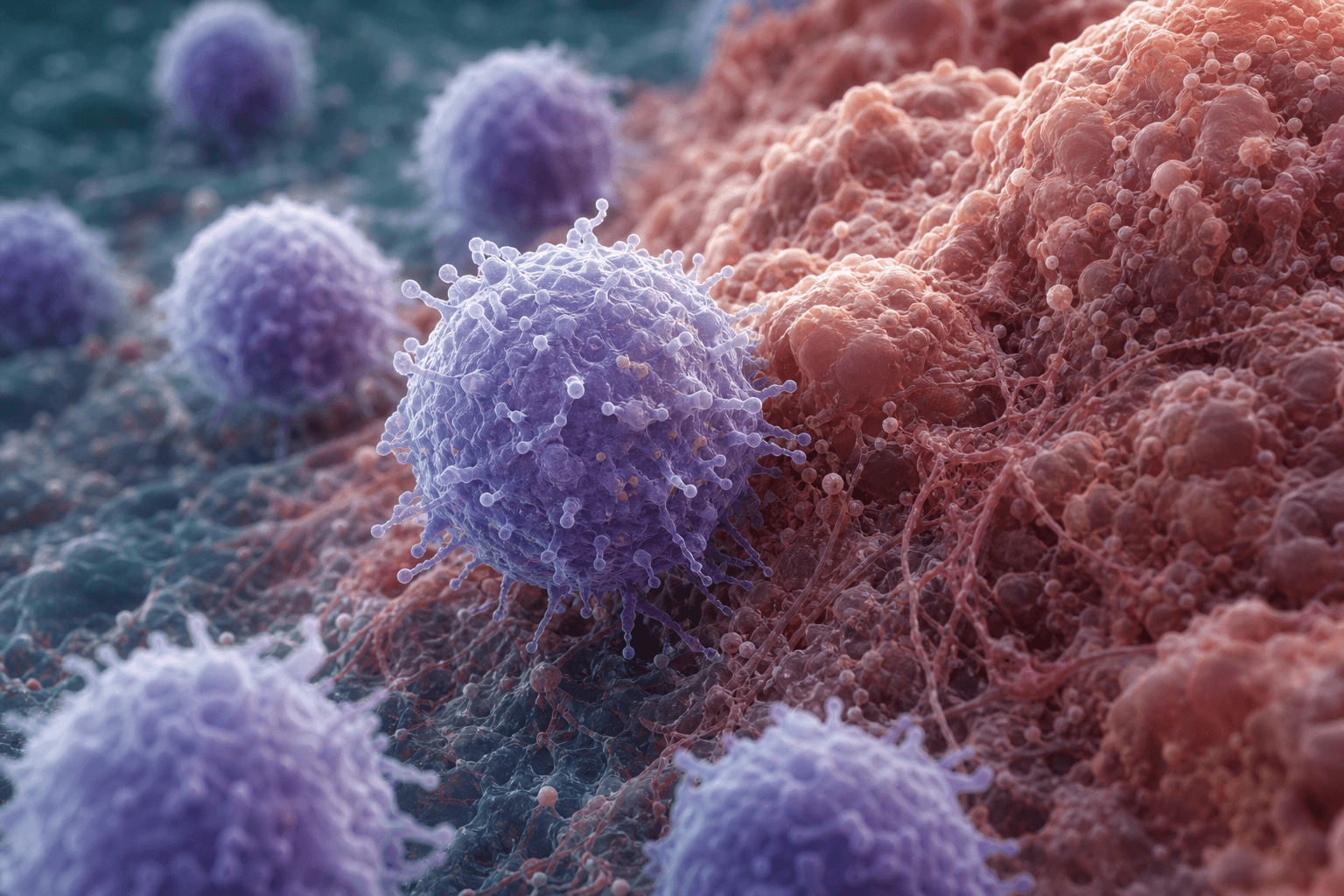
Photo provided = AI-generated image
Chinese researchers have found that an existing treatment for diabetic complications can reprogram immune cells surrounding cancer cells and enhance the effectiveness of cancer immunotherapy.
On the 13th (local time), a research team led by Professor Zhu Liang of the School of Medicine at Shanghai Jiao Tong University published these findings in the international journal Journal for ImmunoTherapy of Cancer (JITC).
The researchers focused on the fact that immune checkpoint inhibitors (ICIs) are effective against many cancer types but do not work in some patients. One factor implicated in this lack of response is an immunosuppressive tumor microenvironment (TME) induced by tumor-associated macrophages (TAMs).
The study found that AKR1B1, known as a metabolic enzyme, is highly expressed in tumor-associated macrophages and acts as a key “switch” regulating immune function. Through the GSH/ROS redox axis, AKR1B1 reprograms macrophage metabolism, suppressing the NF-κB signaling pathway and reducing expression of the chemokine CCL5, a substance that attracts immune cells to tumors.
The researchers confirmed that this mechanism impairs the function of CD8+ T cells, which attack cancer cells, creating an immunosuppressive environment. They administered the AKR1B1 inhibitor Epalrestat, which is used to treat diabetic complications, in breast cancer and lung cancer animal models.
Epalrestat converted tumor-associated macrophages into an immune-stimulating form and restored the CCL5-CCR5 signaling axis. This enhanced the tumor-killing ability of CD8+ T cells and suppressed tumor growth, while also substantially increasing treatment sensitivity to immune checkpoint inhibitors.
The study identified the AKR1B1–GSH/ROS–NF-κB–CCL5 signaling axis as a key mechanism regulating tumor immunity. It also provides a theoretical basis and a new clinical development pathway for using the existing drug Epalrestat in cancer immunotherapy.
BIOBOOK TEAM
biobookmedia@biobook.co.kr
Nature Cell Wins First-Instance Ruling on Jointstem … “Order for Reconsideration, Not Approval”

Biohub’s $2.4 Billion ‘Virtual Cell’ Project Gives Big Tech 1-Year Exclusive Data Access

Korean Biotechs Target DMOADs for Cartilage Regeneration in Race for Global First

GSK adopts Chai Discovery AI model, citing strong antibody binding

FDA Approves Teva’s Once-Monthly Injectable Schizophrenia Drug Weltruza
“The Tumor’s Glucose Battle” … Cause of Premature Th9 Cell Aging Identified

Peptone nears end of two-year Lilly technology evaluation…follow-on deal could be pivotal

HLB Pharmaceutical Completes 60.8 Billion Won Rights Offering, Bets on New Hyangnam Plant as Management Participation Grows

Song Young-sook sells 86 billion won stake; buyer is daughter’s one-person company — Is a second round of Hanmi control battle looming?
