Market
Rare disease drug Ultomiris misses primary endpoint in phase 3 trial CEO: “2030 target achievable without additional M&A”

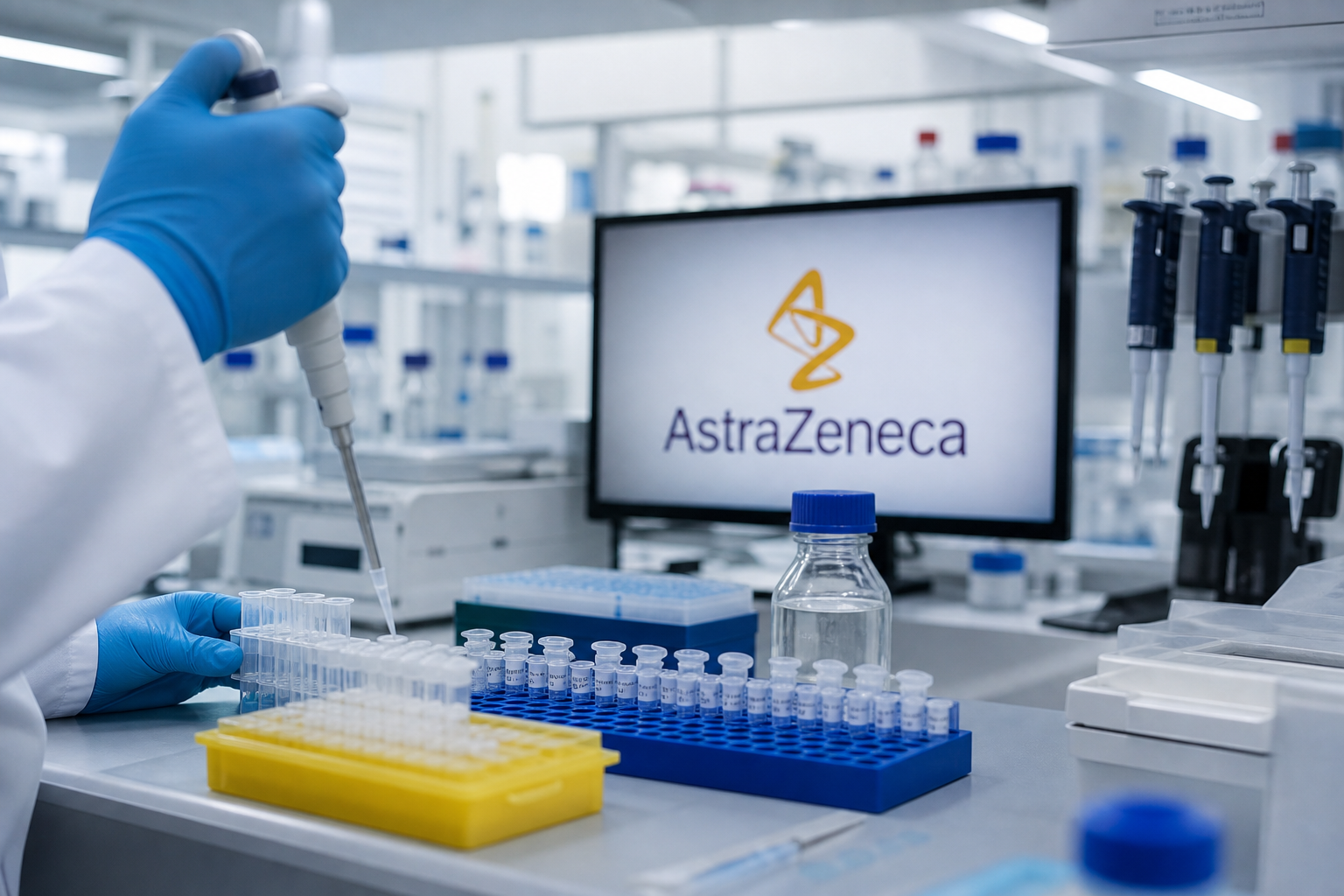
AstraZeneca said its goal of reaching 120 trillion won in revenue by 2030 remains unchanged despite the failure of a phase 3 trial of a key drug.
According to biotech news outlet Fierce Pharma on July 27 (local time), AstraZeneca made the statement during its second-quarter 2026 earnings announcement. The company reported second-quarter revenue of $15.4 billion, up 5% from the same period a year earlier on a constant-exchange-rate (CER) basis.
Revenue for the first half of the year totaled $30.7 billion, a 6% increase. The oncology and respiratory and immunology segments drove growth.
However, the company announced that a phase 3 trial of its rare disease treatment Ultomiris had failed. The trial enrolled adolescent and adult patients who developed thrombotic microangiopathy (TMA) after hematopoietic stem cell transplantation.
In the trial, Ultomiris failed to achieve statistical significance versus placebo on the primary endpoint, which assessed event-free survival through week 26. Ultomiris generated second-quarter revenue of $1.31 billion, up 12% from a year earlier, but fell short of market expectations.
The company also said it would discontinue development of two antibody-drug conjugate (ADC) candidates. The pipeline setbacks follow phase 3 failures for the immuno-oncology drug Imfinzi and rare disease treatment Voydeya.
Despite the successive setbacks, company executives expressed confidence. Pascal Soriot, AstraZeneca’s chief executive officer (CEO), stated, “Additional business development (BD) or mergers and acquisitions (M&A) will not be necessary to achieve our revenue target.”
Soriot said, “Our confidence comes from looking at the entire phase 3 pipeline, not any single asset,” adding, “We will focus internally on strengthening products that are worth investing in.”
Some products, in fact, outperformed market expectations. Strensiq, a treatment for hypophosphatasia, Calquence, a lymphoma treatment, and Tezspire, an asthma treatment, posted quarterly revenue growth of 36%, 16% and 45%, respectively, offsetting weakness in some products.
AstraZeneca maintained its previous full-year 2026 guidance for mid-to-high single-digit revenue growth. It also reaffirmed its goal of reaching $80 billion in revenue by 2030.
BIOBOOK TEAM
biobookmedia@biobook.co.kr
Orient Bio Expands Domestic Supply of SPF Rabbits, but Reversal of Chronic Losses Remains Elusive

Celltrion’s Third-Quarter Operating Profit Surges 69% to 510 Billion Won

ViOL Medical Wins Thai Approval for HIFU Device, Laying Groundwork for Consumables Revenue

SCD Pharm’s glaucoma drug Latast reaches 11% market share, supplied back to originator

Alteogen’s ALT-B4 Infringes Halozyme Patent in Europe; Keytruda SC Sales Banned in 8 Countries

Immunology Drug Developer TrexBio Prices $117 Million IPO
Rural Development Administration Develops Two Molecular Markers to Identify Leaf Splitting in Squash
MFDS Begins Distribution of Internationally Certified Reference Materials, Including 24 New Items, for a Total of 882
Ministry of Trade, Industry and Energy signs agreement to promote biotech and medical devices in Gangwon; site visit set for the 14th



