
Policy & Regulation
10.3% have been prescribed or used obesity drugs; appearance-related use stands out among young adults Misuse by people at normal weight raises concerns about side effects and gaps in safety oversight

Glucagon-like peptide-1 (GLP-1) obesity drugs are rapidly being used by younger people for cosmetic purposes, moving beyond their intended role in treating chronic disease.
According to a report released on the 25th by the KB Financial Group Management Research Institute, 10.3% of respondents had been prescribed or used a GLP-1 obesity drug within the past year. The rate was highest among Gen Z, defined as those born after 1995, at 16.5%, followed by millennials at 14.2%.
Use was more pronounced among young people than among middle-aged and older adults, who have relatively higher rates of severe obesity. The generations also differed markedly in their reasons for use. While 55.3% of baby boomers cited improving their health, 48.2% of Gen Z respondents chose appearance and body-shape management.
This pattern of use conflicts with the approval criteria set by the Ministry of Food and Drug Safety. GLP-1 obesity drugs such as Wegovy and Mounjaro should be administered only to patients with an initial body mass index (BMI) of 30 or higher, or to patients with a BMI of 27 or higher who have comorbidities such as hypertension or diabetes.
These prescription drugs act on the central nervous and digestive systems to slow the passage of food and increase feelings of fullness. However, in South Korea, their nonreimbursed status has led to widespread prescriptions for cosmetic purposes, including for people at normal weight or with mild overweight. Because national health insurance does not cover the drugs, the system makes it difficult to control prescribing even when frontline medical institutions do not rigorously verify patients’ actual BMI.
Concerns are also growing about adverse effects from use for cosmetic purposes. Clinicians warn that when people at normal weight use GLP-1 drugs indiscriminately to lose weight, they may face not only gastrointestinal adverse reactions such as nausea, vomiting and diarrhea, but also serious nutritional imbalances, rapid loss of muscle mass and a risk of telogen effluvium.
In the survey, 57.3% of all respondents said they were concerned about adverse effects, but 65.5% of respondents who had already used the drugs said they intended to use them again, pointing to a pattern of drug dependence.
As prescribing and distribution expand, gaps in postmarket oversight are also coming to light. Prescriptions for teenagers have reached thousands, and cases of inappropriate prescriptions for children younger than 10 have also been identified. Although the Ministry of Health and Welfare has banned prescriptions through telemedicine, the irregular practice of “prescription shopping” persists: Patients use online platforms to specify a dose themselves and then book an in-person appointment.
Regulatory discussions have also faced difficulties. On June 5, the Ministry of Food and Drug Safety issued an advance notice of its plan to designate key ingredients, including semaglutide and tirzepatide, as drugs of concern for misuse. However, regulatory review has been delayed amid objections that the measures are excessive and questions about their effectiveness. Standards for checking for duplicate prescriptions in advance, as well as limits on treatment duration, are also lacking when these drugs are prescribed alongside existing psychotropic appetite suppressants such as phentermine.
There are growing calls for obesity drugs to move beyond their image as short-term weight-loss medications if they are to be recognized for their value as treatments for chronic metabolic disease. As development of next-generation domestic obesity drugs, including Hanmi Pharmaceutical’s efpeglenatide, gathers pace, establishing safety measures such as mandatory BMI verification at the prescribing stage and a monitoring system for nonreimbursed prescriptions is emerging as a key priority.
BIOBOOK TEAM
biobookmedia@biobook.co.kr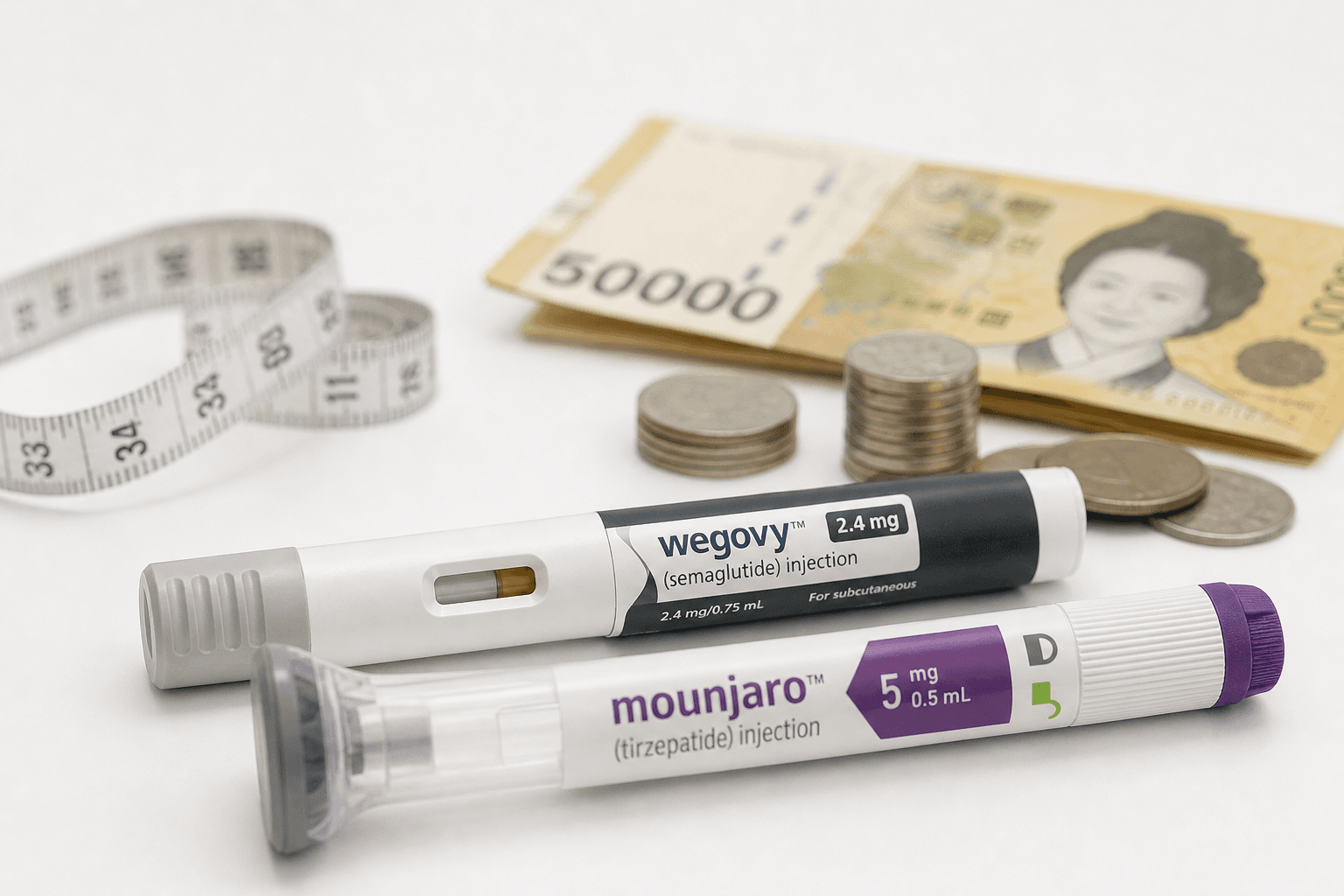
South Jeolla-Gwangju Moves to Create Nation’s First Ordinance Supporting Obesity Drug Costs

MFDS to Use AI for Vaccine Release and Process Validation, Shifting From Post-Production Testing to Real-Time Prediction
Tandem’s tubeless insulin pump wins FDA approval, with wear time of up to 7 days

‘Speed Race’ for Innovative Medical Devices Stalls at Health Insurance Reimbursement Hurdle

The ‘Valley of Death’ for Infectious Disease Treatments: Cross-Agency Coordination Is Key
Mounjaro Costs 59,000 Won in Japan, 300,000 Won in Korea, Sparking Price Debate


