Science
Tea polyphenols and probiotic outer membrane vesicles fused to create a hybrid drug delivery vehicle Oral administration eased colitis symptoms in mouse model; study published in Science Advances

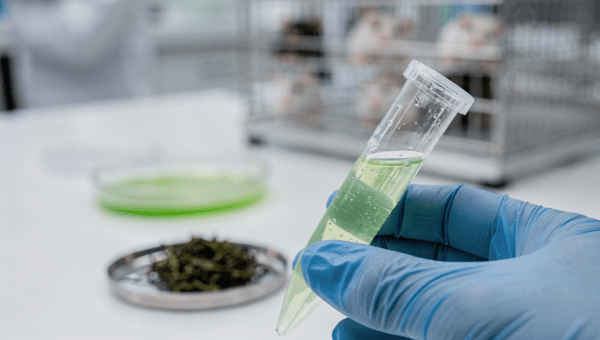
Chinese researchers have developed a “nanomissile” technology that uses green tea compounds and probiotic-derived materials to precisely deliver an oral RNA therapeutic to sites of intestinal inflammation.
According to Chinese biotech media outlet BioOn on the 6th, a research team led by Professor Ryu Song-bae of Zhejiang University published the findings in the international journal Science Advances on March 27 (local time). Oral RNA drugs have limited stability and are difficult to deliver to target sites because of the complex gastrointestinal environment and various degradative enzymes.
To address this problem, the researchers designed a drug delivery vehicle using polyphenols, the major bioactive compounds in tea, and probiotic-derived “outer membrane vesicles (OMVs).” First, they modified the food-grade green tea polyphenol “epigallocatechin (EGC)” to create nanovesicles that encapsulate therapeutic RNA.
They then fused the nanovesicles with outer membrane vesicles derived from the probiotic “Escherichia coli Nissle 1917 (E. coli Nissle 1917)” to create stable hybrid vesicles. The outer membrane vesicles serve as “armor,” stably protecting their contents even in the gastrointestinal environment.
The researchers further increased targeting precision by attaching the ligand HA-BR-KDEL, which sequentially targets specific cells and intracellular organelles. Hyaluronic acid (HA) identifies inflammatory cells, while the KDEL peptide targets the endoplasmic reticulum, an intracellular organelle.
In this study, the researchers loaded the system with siRNA that inhibits the pro-inflammatory cytokine “tumor necrosis factor-alpha (TNF-α).” When the oral therapeutic was administered to a mouse model of induced colitis, the researchers observed significant alleviation of colitis symptoms and restoration of intestinal homeostasis.
The researchers said their “tea polyphenol hybrid outer membrane vesicle” strategy offers a new possibility for developing oral gene therapies for chronic diseases such as inflammatory bowel disease.
Biobook News
biobookmedia@biobook.co.kr
Nature Cell Wins First-Instance Ruling on Jointstem … “Order for Reconsideration, Not Approval”

Biohub’s $2.4 Billion ‘Virtual Cell’ Project Gives Big Tech 1-Year Exclusive Data Access

Korean Biotechs Target DMOADs for Cartilage Regeneration in Race for Global First

GSK adopts Chai Discovery AI model, citing strong antibody binding

FDA Approves Teva’s Once-Monthly Injectable Schizophrenia Drug Weltruza
“The Tumor’s Glucose Battle” … Cause of Premature Th9 Cell Aging Identified

Peptone nears end of two-year Lilly technology evaluation…follow-on deal could be pivotal

HLB Pharmaceutical Completes 60.8 Billion Won Rights Offering, Bets on New Hyangnam Plant as Management Participation Grows

Song Young-sook sells 86 billion won stake; buyer is daughter’s one-person company — Is a second round of Hanmi control battle looming?
