Science
The hippocampus is activated early in pain, then becomes dysfunctional as inflammation develops over time<br>Suppressing microglia improved depressive symptoms in an animal study

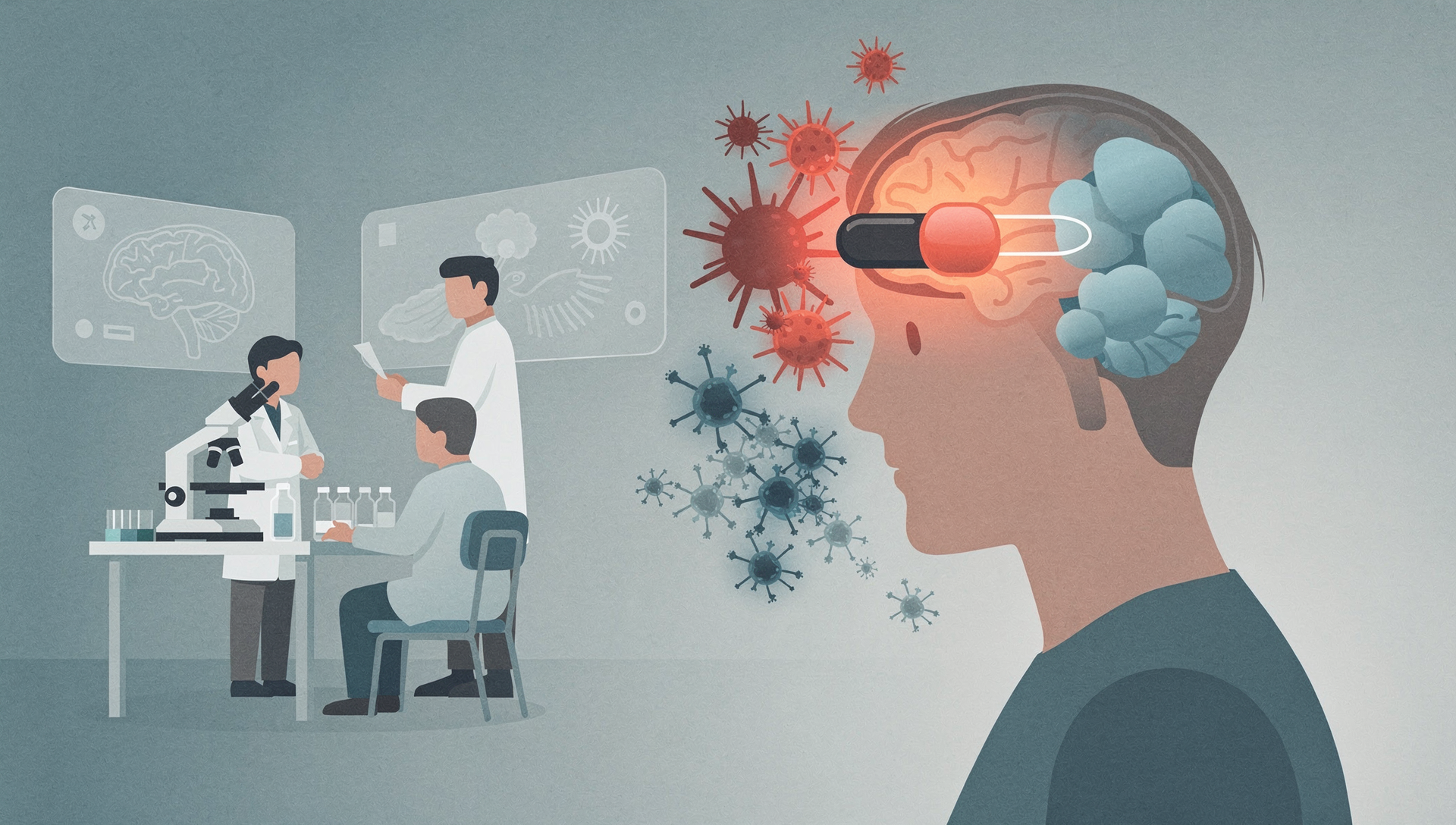
Image generated by AI
A “switch” in the brain that regulates whether chronic pain progresses to depression has been identified.
According to the life sciences news outlet BioOn and others on the 13th, a joint Chinese-British research team found that the reason chronic pain triggers depression in only some people lies in stepwise changes in the hippocampus, the brain’s memory center. The findings were published in the international journal Science.
Analysis of brain imaging data from the UK Biobank showed that patients with chronic pain who did not have depression tended to have larger hippocampal volumes and greater activity. The researchers interpreted this as an early compensatory response by the brain to resist pain.
By contrast, patients with both chronic pain and depression had smaller hippocampal volumes and reduced activity. “These changes are not an inherent vulnerability but a gradual phenomenon that emerges as the brain responds to the experience of long-term pain itself,” said Professor Zhenpeng Peng of the University of Warwick, who led the study.
The researchers confirmed the mechanism in greater detail through animal experiments. In a rat model of chronic neuropathic pain, increased pain sensitivity, anxiety and depression-like behaviors emerged sequentially, consistent with structural and activity changes in the hippocampus.
The most important changes were observed in the hippocampal dentate gyrus. Early in the pain process, the generation of new neurons increased as the brain attempted to adapt to stress, but over time, microglia, the brain’s immune cells, became abnormally activated. This disrupted normal signaling between neurons and microglia, triggering an inflammatory response.
This dysfunction served as the “switch” that converted the brain’s adaptive response to pain into the maladaptive state of depression. In fact, when the researchers suppressed abnormal microglial activity in the animal model, depression-like behaviors improved.
“This discovery suggests that treatments targeting inflammation in the hippocampus could become a new strategy for preventing depression in patients with chronic pain,” Professor Peng said.
BIOBOOK TEAM
biobookmedia@biobook.co.kr
Nature Cell Wins First-Instance Ruling on Jointstem … “Order for Reconsideration, Not Approval”

Biohub’s $2.4 Billion ‘Virtual Cell’ Project Gives Big Tech 1-Year Exclusive Data Access

Korean Biotechs Target DMOADs for Cartilage Regeneration in Race for Global First
GSK adopts Chai Discovery AI model, citing strong antibody binding

FDA Approves Teva’s Once-Monthly Injectable Schizophrenia Drug Weltruza
“The Tumor’s Glucose Battle” … Cause of Premature Th9 Cell Aging Identified

Peptone nears end of two-year Lilly technology evaluation…follow-on deal could be pivotal

HLB Pharmaceutical Completes 60.8 Billion Won Rights Offering, Bets on New Hyangnam Plant as Management Participation Grows

Song Young-sook sells 86 billion won stake; buyer is daughter’s one-person company — Is a second round of Hanmi control battle looming?
