Science
‘CpG density’ in DNA plays a key role in determining memory duration New target proposed for treating chronic diseases and cancer, raising hopes for new treatment strategies

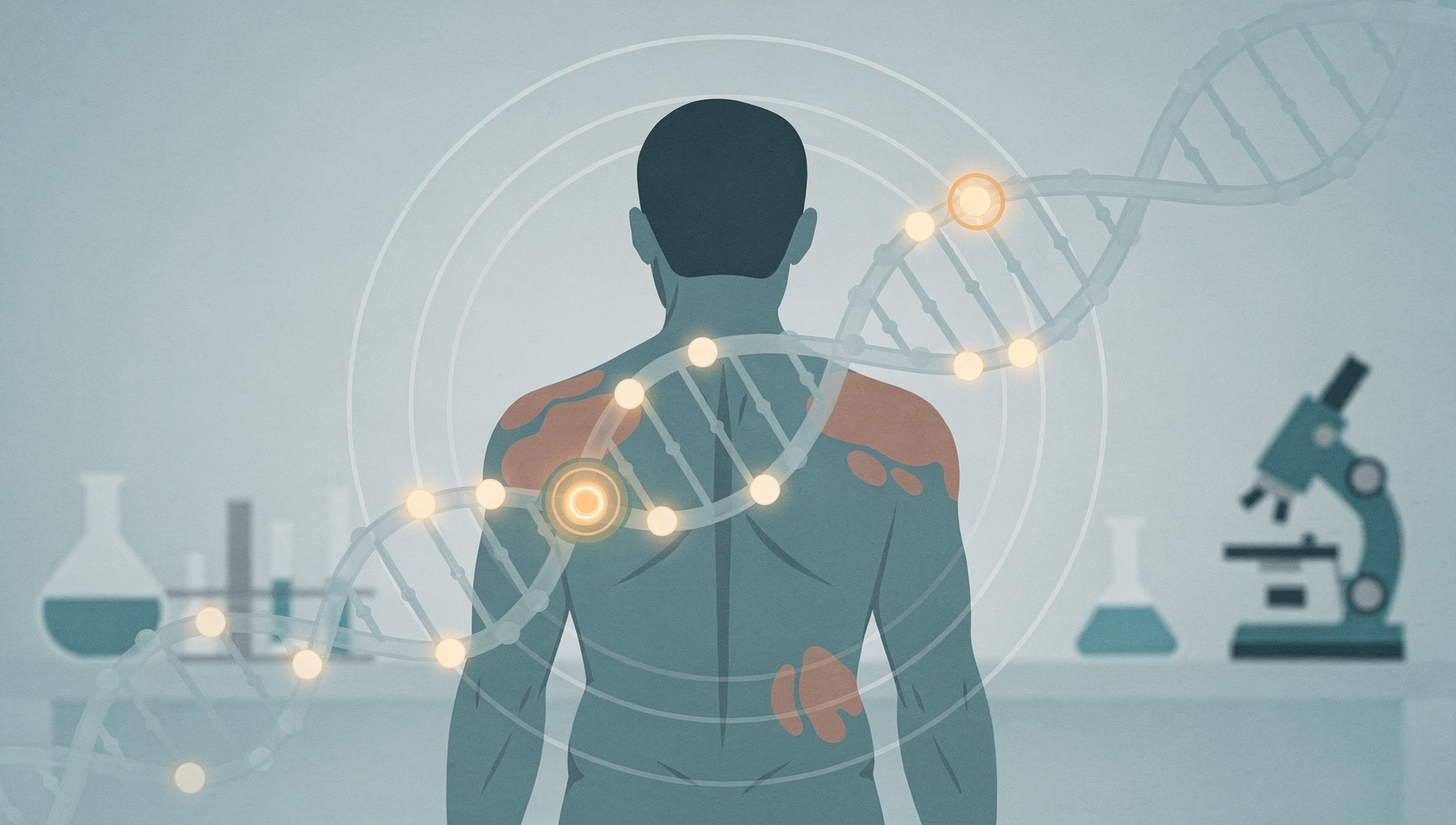
Photo provided by=AI-generated image
The key mechanism underlying why chronic inflammatory diseases such as psoriasis repeatedly recur in the same areas—the secret to the longevity of “inflammatory memory”—has been identified.
BioOn, a Chinese biotechnology news outlet, reported on the 9th (local time) that a research team led by Elaine Fuchs, PhD, of Rockefeller University published these findings in the March 26 issue of the international journal Science. The team identified that characteristics of specific DNA sequences act as a “switch” determining how long inflammatory memory persists.
In previous research, the team found that epidermal stem cells in the skin have an epigenetic ability to remember inflammation. During acute inflammation, certain transcription factors (STAT3, AP1) open the chromatin and create “memory regions,” which remain open even after the inflammation subsides.
In this study, the researchers induced psoriasis-like inflammation in mice and followed them for 2 years. Of the 934 memory regions generated after inflammation, 117—approximately 10%—remained active for a period comparable to the mice’s lifespans. This long-term memory was stably transmitted to daughter cells even after approximately 50 cell divisions.
The researchers developed a deep-learning model called “PersistNet” to analyze the factors determining memory duration. They found that higher density of “CpG dinucleotide” sequences within memory regions was the key feature associated with longer-lasting memory. In effect, CpG density acts as a timer regulating how long the memory persists.
The molecular mechanism was also identified. Regions with high CpG density undergo DNA demethylation during acute inflammation, and this state is maintained for life. The demethylated CpG sequences recruit the transcription factor ETS1 and the histone variant “H2A.Z,” keeping the chromatin structure open. This structure is replicated unchanged during cell division, making the memory persistent.
This long-term inflammatory memory also had positive effects. Older mice that had experienced inflammation when young healed wounds 40% faster than mice that had not. This was attributed to the rapid activation of wound-repair genes, including “Aim2” and “Il18,” in the long-term memory regions.
The research team confirmed that this mechanism is a universal phenomenon that occurs not only in the skin but also in other tissues and diseases, including pancreatitis and trained immunity after bacterial infection. This suggests that the mechanism could provide new targets for treating chronic inflammatory diseases, cancer, and aging-related diseases.
Elaine Fuchs, PhD, who led the study, said, “Going forward, we will investigate how to distinguish memories that benefit tissue repair from harmful memories that cause disease,” adding, “Our goal is to develop treatment strategies that selectively eliminate harmful memories and break the cycle of chronic disease recurrence.”
BIOBOOK TEAM
biobookmedia@biobook.co.kr
“Reaching the brain with a subcutaneous injection” … Arrowhead cuts Alzheimer’s tau protein by 73%
Verastem Sets a “New Standard” for KRAS-Targeted Drug, With 80% Survival Rate in Pancreatic Cancer

Celltrion Wins South Korean Approval for Phase 3 Trial of Zymfentra in Rheumatoid Arthritis

AptaBio Reports Safety in Phase 2 Trial of Contrast-Induced Kidney Injury Treatment

Oral GLP-1 diabetes drug improves blood sugar and weight in Chinese phase 3 trial
Google Deploys ‘Gemini 4 Argon’ in Drug Development, Boosting Molecular Computation Speed by 2.3-Fold



