B· Original
Domestic company secures global rights and independently takes drug from late-stage trials through approval Full approval based on single-arm trial marks an unusual FDA regulatory innovation

A cancer drug has emerged from a South Korean biopharmaceutical company that secured global rights and independently took it from late-stage clinical development through its U.S. Food and Drug Administration (FDA) application and approval.
On the 2nd (local time), the FDA announced full approval of Ripaxtu (ingredient name: lirafugratinib), an oral targeted therapy for cholangiocarcinoma developed by Elevar Therapeutics, HLB’s U.S. subsidiary. The indication is for adults with previously treated, unresectable locally advanced or metastatic cholangiocarcinoma with fibroblast growth factor receptor 2 (FGFR2) gene fusions or other rearrangements.
The approval came ahead of the review goal date originally set by the FDA. Elevar Therapeutics plans to begin full-scale prescribing and commercialization in the U.S. market in the fourth quarter of this year, once it completes preparations for its supply chain and distribution network.
The approval of Ripaxtu was based on the global phase 1/2 ReFocus trial, a multicenter, open-label, single-arm study. Among 116 patients with advanced cholangiocarcinoma who had not received an FGFR inhibitor but had previously received chemotherapy or immunotherapy, the objective response rate (ORR), as assessed by an independent review committee, was 45.7%.
Median duration of response (mDOR) was 11.8 months, and median progression-free survival (mPFS) was 11.3 months. The progression-free survival rate at 12 months was about 49.2%, and median overall survival (mOS) was 22.8 months.
Ripaxtu is an irreversible, selective FGFR2 inhibitor designed to overcome the limitations of existing FGFR drugs, which indiscriminately inhibit FGFR1 through FGFR4 and cause severe toxicity. It demonstrated the safety and tolerability needed for long-term treatment, lowering the incidence of hyperphosphatemia and severe diarrhea to the low 20% range.
The regulatory status of the approval is drawing the most attention from the biopharmaceutical industry. Because Elevar Therapeutics submitted a new drug application (NDA) based on single-arm clinical data without a control group, it had anticipated accelerated approval, which would require a postmarketing confirmatory trial. However, the FDA ultimately granted full approval without requiring an additional large-scale confirmatory trial.
Granting full approval based solely on tumor response rates and duration observed in a single-arm trial is considered a very rare regulatory innovation in the history of U.S. regulatory reviews of cancer drugs.
The clinical difficulties faced by competing drugs that entered the race earlier were behind the FDA’s exceptional decision. Incyte’s Pemazyre (ingredient name: pemigatinib) and Taiho Oncology’s Lytgobi (ingredient name: futibatinib) received accelerated approval in 2020 and 2022, respectively, but had difficulty recruiting patients for confirmatory trials intended to support conversion to full approval.
QED Therapeutics’ Truseltiq (ingredient name: infigratinib) ultimately failed to recruit patients for its confirmatory trial, voluntarily withdrew its approval in 2024 and was removed from the market. FGFR2-altered patients are so rare that randomized controlled trials involving hundreds of patients were practically difficult, and there were also significant ethical concerns about giving a placebo to half of patients when the drug’s efficacy had been demonstrated.
The FDA is understood to have decided on full approval after comprehensively assessing the unmet clinical need, limits on feasibility, and Ripaxtu’s efficacy and safety profile.
Full approval will spare Elevar Therapeutics substantial development risk and costs. The cost per patient in global cancer drug trials is typically estimated at about $200,000. Conducting a randomized phase 3 confirmatory trial involving hundreds of patients would have required at least tens of millions of dollars in additional costs and several years, while also exposing the company to the risk of having its approval withdrawn.
Full approval is expected to raise the bar for single-arm trial approvals, creating an entry barrier for companies developing later FGFR2-targeted cancer drugs. These later drugs will face the challenge of demonstrating clinical benefit superior to Ripaxtu, which has become the standard of care.
The approval is regarded as a milestone showing that the business model of South Korea’s biopharmaceutical industry has advanced to a new level. Traditionally, South Korean biotech companies discovered drug candidates and completed early-stage trials before licensing them to multinational pharmaceutical companies, leaving late-stage development and global sales to their partners.
For Leclaza (ingredient name: lazertinib), Yuhan Corp.’s lung cancer drug that recently received U.S. approval, Johnson & Johnson, which acquired the U.S. rights, led the U.S. application and commercialization. By contrast, after Elevar Therapeutics licensed global rights from U.S.-based Relay Therapeutics in December 2024, its subsidiary independently led the entire process for Ripaxtu, from analyzing late-stage clinical data and directly submitting the NDA to responding to the FDA review and operating a U.S. commercialization organization.
However, market conditions will be challenging. About 8000 new cases of cholangiocarcinoma are diagnosed annually in the U.S., making it a rare cancer. FGFR2 gene fusions or rearrangements are found in only about 10-15% of patients, primarily those with intrahepatic cholangiocarcinoma, and the current indication is limited to patients receiving second-line treatment after failing prior systemic therapy.
As a result, the number of patients in the U.S. who could receive Ripaxtu directly is limited to several hundred to around 1000 per year. The market already includes Pemazyre and Lytgobi, which have had years to build prescribing experience after receiving accelerated approval. How quickly Ripaxtu can capture prescription share from these early entrants, using its drug selectivity, lower incidence of adverse effects and regulatory credibility as a fully approved drug, will be key to its initial performance.
Elevar Therapeutics is pursuing market expansion and broader indications at the same time to overcome the limitations of the narrow U.S. cholangiocarcinoma market. On the 14th of last month, it submitted a marketing authorization application (MAA) to the European Medicines Agency (EMA) for Ripaxtu as a second-line treatment for cholangiocarcinoma, beginning the European approval review.
It is also conducting the phase 2 ReFocus202 trial, seeking to expand the indication to patients with various solid tumors harboring FGFR2 alterations, regardless of cancer type. Expanding use to other cancers with FGFR2 alterations, such as pancreatic and gastric cancer, and advancing Ripaxtu as a tumor-agnostic targeted cancer drug are expected to be key factors determining its future value.
Ripaxtu’s approval has created an opportunity for Elevar Therapeutics to move beyond being a research and development-focused biotech and become a full-fledged pharmaceutical company that sells drugs directly and generates revenue in the U.S. market. Elevar Therapeutics has been building a marketing organization, insurance coverage and distribution infrastructure targeting major cancer centers and medical oncologists, and Ripaxtu will be the first drug through which it activates and tests that commercialization system.
This is also connected to the future prospects for the combination of rivoceranib and camrelizumab, which is pursuing renewed entry into the U.S. market as a first-line treatment for liver cancer. Cholangiocarcinoma and liver cancer share a key prescribing base: medical oncologists specializing in gastrointestinal and hepatobiliary cancers and major cancer centers. If the liver cancer drug receives additional approvals in the future, it is expected to share the local direct-sales network that has already secured hospital prescribing codes and insurance coverage through Ripaxtu, generating infrastructure synergies and improving cost efficiency.
BIOBOOK TEAM
biobookmedia@biobook.co.kr
Peptone nears end of two-year Lilly technology evaluation…follow-on deal could be pivotal
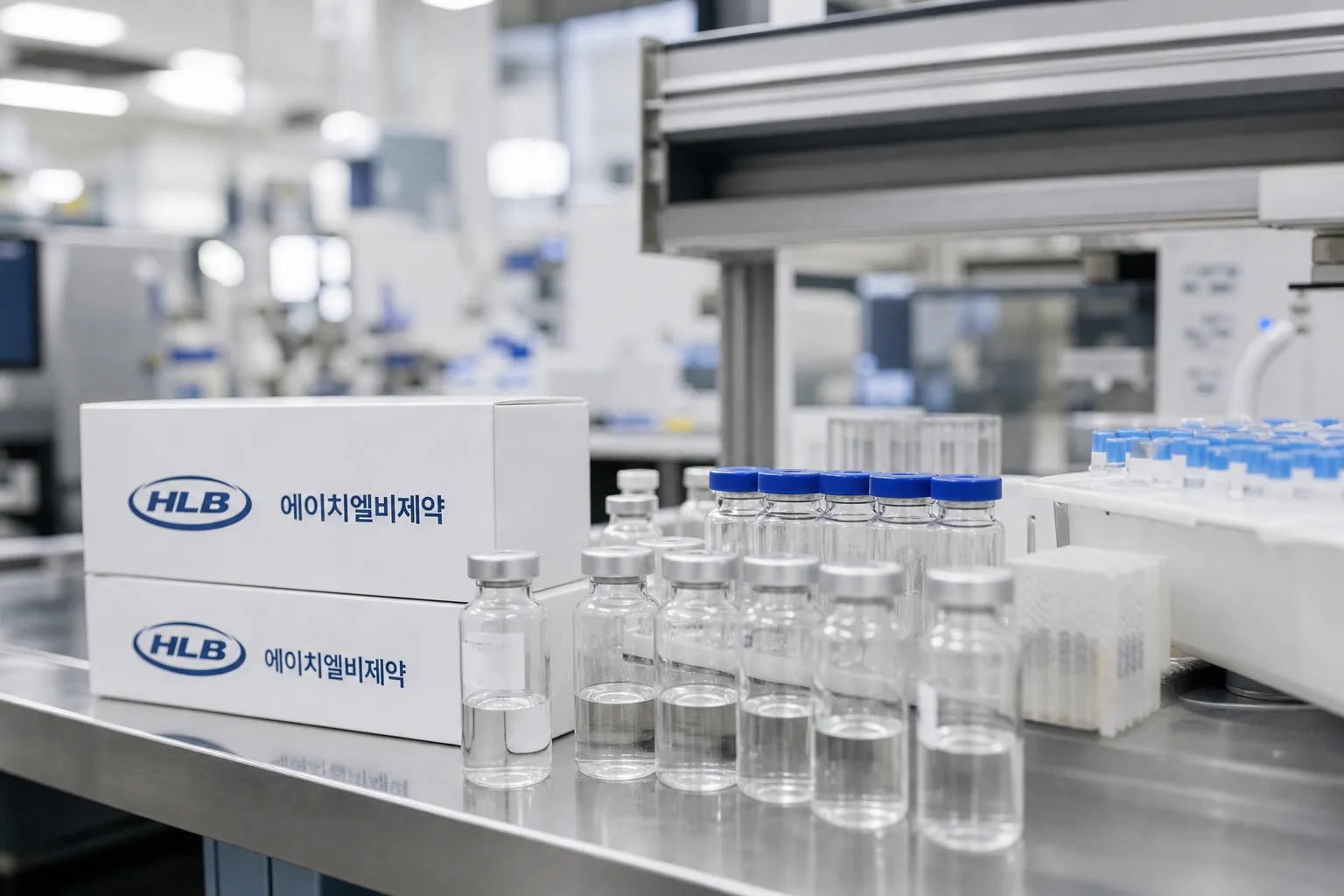
HLB Pharmaceutical Completes 60.8 Billion Won Rights Offering, Bets on New Hyangnam Plant as Management Participation Grows

Song Young-sook sells 86 billion won stake; buyer is daughter’s one-person company — Is a second round of Hanmi control battle looming?
