
Science
A transient stimulus alone can shift stem cell and immune cell states Potential applications in treating intractable diseases and regenerative medicine

KAIST researchers have developed a technology that directs cell fate without permanently altering genes, using only a transient stimulus.
According to Azure Life Sciences on the 23rd (local time), KAIST announced that a research team led by Professor Kwang-Hyun Cho of the Department of Bio and Brain Engineering developed NUDGE, a foundational technology that uses the dynamics of gene regulation within cells to guide cell fate with minimal, transient intervention.
Technologies for changing cell fate have drawn attention as key tools for treating intractable diseases and advancing regenerative medicine because they can differentiate stem cells into cells with specific functions or restore cells damaged by disease or aging to a state closer to normal.
Existing approaches have relied on permanent interventions that lock specific genes in an activated or deactivated state. Although this can produce the desired cell state, it can reduce the cell’s plasticity to adapt to environmental changes and may induce abnormal states that do not occur naturally.
Rather than forcing cells into a fixed state, the research team devised a strategy in which a single transient stimulus enables cells to reach a target state on their own. The approach is similar to briefly clearing a blocked waterway so water can find its own path.
NUDGE is a technology for controlling gene-regulatory networks based on natural dynamics. It analyzes, using computational logic models, how key genes in a cell influence one another to determine the state the cell will ultimately reach. The technology then mathematically decomposes the logical functions describing gene interactions to identify the minimum combination of controls needed to shift from the current state to the target state.
The research team said that, in an evaluation of permanent control across 63 publicly available biological network models, reduced plasticity or abnormal states occurred in 55 cases in which the target phenotype was achieved by fixing a single node. In addition, NUDGE’s approximation method recorded an average intervention error of less than 0.01 in more than 90% of 552 control problems across 69 large-scale biological networks.
NUDGE goes beyond identifying elements to stimulate: It also analyzes the path a stimulated cell takes to reach the target state and the stability of that state after arrival, allowing it to predict whether unexpected states may emerge during the transition.
To test its ability to explain real biological phenomena, the research team applied NUDGE to three processes: cardiomyocyte differentiation, fate determination in mast cells involved in allergic reactions, and the transition of macrophages, immune cells, to an anti-inflammatory state.
In cardiomyocyte differentiation, the team reproduced the previously observed pattern in which the MESP1 gene, important for heart development and regeneration, is activated only transiently early in differentiation. In mast cell formation, the team confirmed that GATA2 and GATA1 are key regulators of cell fate, and in the macrophage model, it derived an optimal transient intervention strategy using IL-4.
Professor Kwang-Hyun Cho said, “NUDGE is not limited to restoring specific cells to a healthy state; it is a general-purpose cell-control technology that guides cells from their current state to a desired state with a single, minimal stimulus.”
He said he expects the technology to serve as a foundational tool for designing new control strategies in areas including stem cell differentiation, aging, autoimmune diseases, regenerative medicine and cancer-reversal therapy that restores cancer cells to a state closer to normal.
Perry Bramana, a master’s student, and Corbin Hopper, a doctoral student in KAIST’s Department of Bio and Brain Engineering, were co-first authors of the study, and doctoral student Woojung Lee was a co-author. The findings were published online on the 14th in the Proceedings of the National Academy of Sciences (PNAS).
BIOBOOK TEAM
biobookmedia@biobook.co.kr
Novartis’ Cosentyx approved for 11th indication, becoming first treatment for polymyalgia rheumatica

Oral IL-23-targeting psoriasis drug icotrokinra approved in Brazil; one tablet daily

Aribio’s Oral Alzheimer’s Drug Meets Trial Goal in Monotherapy Group, Slowing Progression by 31%
SELLAS Leukemia Vaccine Extends Survival by 9 Months, Meets Phase 3 Endpoint

Korean Drugmakers Race to Develop Obesity Treatments That Preserve Muscle During Weight Loss
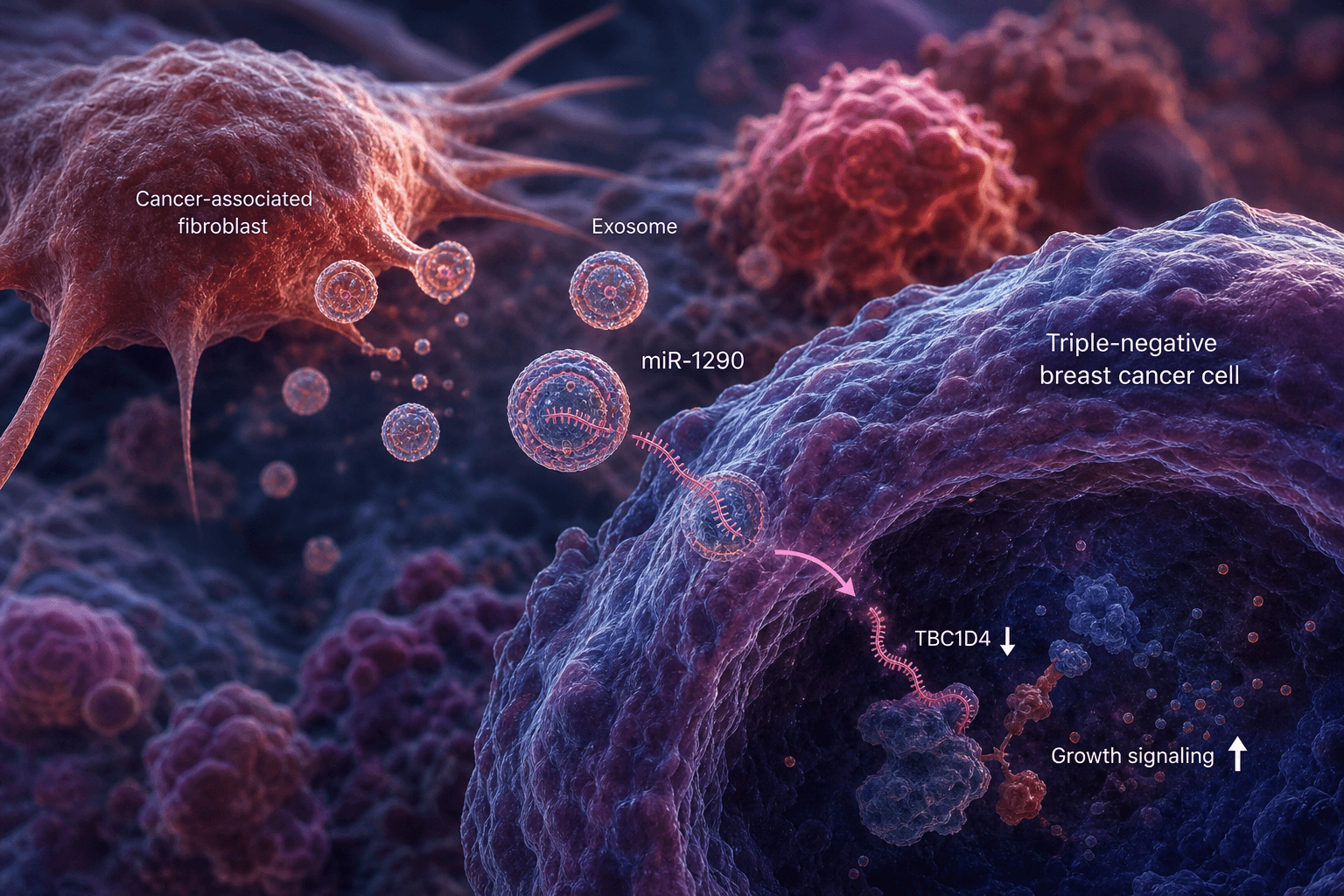
Growth pathway identified in ‘difficult-to-treat’ triple-negative breast cancer, raising potential to repurpose existing drugs


