Science
AI Drug Development Institute to hold introductory seminar Sept. 1 Structure prediction up to 25 times faster

The AI Drug Development Institute of the Korea Pharmaceutical and Bio-Pharma Manufacturers Association will hold an introductory seminar on K-Fold, a homegrown biotech AI model.
The AI Drug Development Institute of the Korea Pharmaceutical and Bio-Pharma Manufacturers Association said on the 31st that it will hold the seminar, “Keeping Up With AI Drug Development: An Introductory Seminar on K-Fold,” on Sept. 1 at the association’s headquarters in Bangbae-dong, Seoul.
The seminar is designed to help participants understand the development background and operating principles of K-Fold, a next-generation biotech AI model recently unveiled by KAIST, and learn how to use it in drug development research.
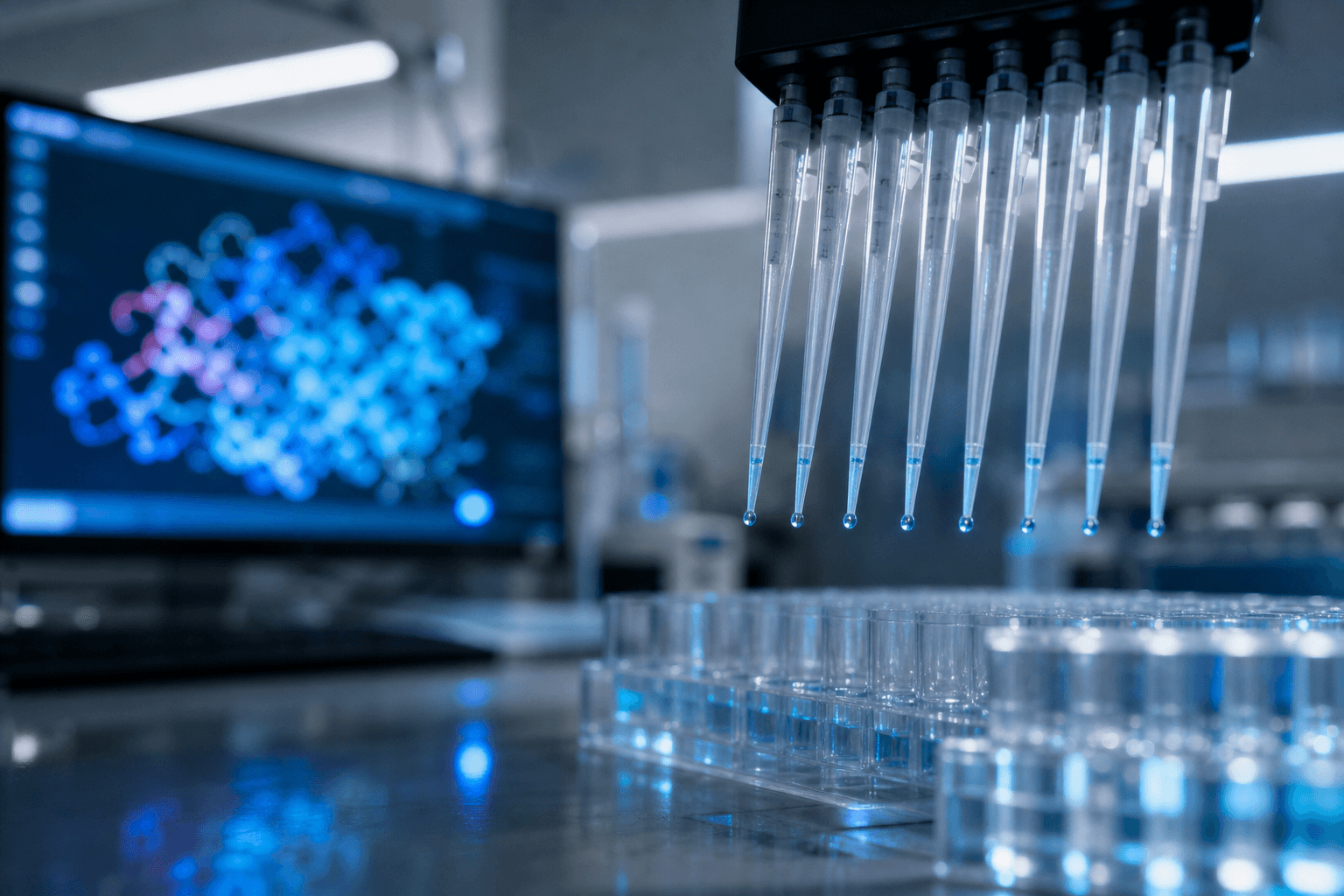
K-Fold was developed by “Team KAIST,” led by Woo Yeon Kim, a professor in KAIST’s Department of Chemistry and former head of the AI Drug Development Support Center, now the AI Drug Development Institute. It can predict not only the 3D structures of proteins but also interactions and binding structures between proteins and drug candidates, DNA, RNA and other biomolecules.
Its performance is said to be close to that of Google DeepMind’s AlphaFold 3, a leading global biotech AI model. Its ability to eliminate the preprocessing step used by existing models and increase structure prediction speed by up to 25 times is also considered a competitive advantage.
K-Fold has also drawn attention because it was implemented as a platform to make it easy for researchers to use in their work. The seminar focuses on translating these technological achievements into practical applications in pharmaceutical and biotech research.
The lecture will be led by Sang-yeon Hwang, head of the advanced research team at Hits. It will cover the specialized foundation model project, the educational objectives of K-Fold, its development background and model principles, prediction performance and plans for further development, followed by hands-on training using HyperLab.
Chairman Yeon-hong Noh said, “The development of K-Fold is significant because it demonstrates our country’s ability not only to use overseas biotech AI technologies but also to develop core technologies of a world-class standard on our own.”
He added, “I expect technologies such as K-Fold to lower barriers to researchers’ use of AI, increase the speed and efficiency of drug candidate discovery, and, over the long term, serve as a catalyst for strengthening the research and development competitiveness of our pharmaceutical and biotech industry.”
AI Drug Development Institute Director Pyo Jun-hee said, “K-Fold is an important example of connecting biotech AI technology developed by Korean researchers with practical tools that researchers can easily use.” She added, “Starting with this seminar, we plan to continue expanding educational and collaborative opportunities that connect outstanding domestic AI technologies with pharmaceutical and biotech research.”
BIOBOOK TEAM
biobookmedia@biobook.co.kr
Nature Cell Wins First-Instance Ruling on Jointstem … “Order for Reconsideration, Not Approval”

Biohub’s $2.4 Billion ‘Virtual Cell’ Project Gives Big Tech 1-Year Exclusive Data Access

Korean Biotechs Target DMOADs for Cartilage Regeneration in Race for Global First
GSK adopts Chai Discovery AI model, citing strong antibody binding
FDA Approves Teva’s Once-Monthly Injectable Schizophrenia Drug Weltruza
“The Tumor’s Glucose Battle” … Cause of Premature Th9 Cell Aging Identified

Peptone nears end of two-year Lilly technology evaluation…follow-on deal could be pivotal

HLB Pharmaceutical Completes 60.8 Billion Won Rights Offering, Bets on New Hyangnam Plant as Management Participation Grows

Song Young-sook sells 86 billion won stake; buyer is daughter’s one-person company — Is a second round of Hanmi control battle looming?
