
Policy & Regulation
Monthly distribution of GLP-1 obesity drugs jumps from 160,000 to 3.12 million units Adverse effects involving vision loss reflected late; gaps remain in monitoring combination prescriptions

Distribution of GLP-1 obesity drugs in South Korea surged about 19-fold in 10 months, but health authorities’ safety oversight showed gaps in both adverse-event monitoring and prescription controls.
According to the pharmaceutical and biotech industry on the 14th, Novo Nordisk Pharma Korea recently submitted an application to the Health Insurance Review and Assessment Service seeking a decision on National Health Insurance reimbursement for Wegovy. Hanmi Pharmaceutical received marketing authorization for Epe, a new drug tailored to the characteristics of Korean patients, while other biotech companies have also signed a series of overseas licensing agreements, rapidly expanding the supply chain.
Statistics from the Pharmaceutical Integrated Information Center, disclosed at the National Assembly Health and Welfare Committee’s audit of the Ministry of Food and Drug Safety on the 13th, show that monthly distribution of GLP-1 obesity drugs in South Korea surged about 19.4-fold, from around 160,000 units in October 2024 to 3,119,941 units in July this year.
As prescriptions climbed to millions of units in a short period, the monitoring system meant to ensure safe use was slow to respond. On the 7th, the MFDS added nonarteritic anterior ischemic optic neuropathy (NAION), which can occur after treatment with Wegovy and other drugs, to their product labeling as an adverse effect. NAION is a condition in which blood flow to the optic nerve is blocked and can lead to permanent blindness.
The European Medicines Agency (EMA) had already officially classified NAION as a very rare adverse effect last year, and class-action lawsuits followed in the United States. A suspected case was also reported in South Korea in December 2024, but the MFDS faced criticism at the audit for revising the product labeling only belatedly, after failing for more than 1 year and 9 months to proactively follow up on the patient’s condition or concomitant medications.
The Drug Utilization Review (DUR) system used at the prescribing stage also has gaps. At medical institutions, it is common for patients taking psychotropic appetite suppressants such as phentermine or phendimetrazine to receive additional prescriptions for Wegovy or Mounjaro. However, the current DUR system has no criteria for checking therapeutic duplication between GLP-1 drugs and psychotropic appetite suppressants.
As a result, the electronic system does not issue a warning about the risks of combination use when a physician prescribes both drugs at the same time or a patient visits multiple clinics to obtain them. There are also no criteria for caution regarding treatment duration, leaving no mechanism to control large prescriptions for several months’ supply at a time.
Questions have also been raised about the effectiveness of the MFDS’ designation of drugs as subject to misuse concerns. On June 5, the MFDS announced plans to designate products containing liraglutide, semaglutide and tirzepatide as drugs subject to misuse concerns, but the final notice has remained pending for four months at the Office for Government Policy Coordination’s regulatory review stage.
Even if the notice is finalized, the legal effects of the system would be limited to blocking pharmacies in areas exempt from the separation of prescribing and dispensing from selling the drugs without a prescription and requiring warning language on drug boxes. Given that most consumers receive prescriptions for noncovered cosmetic purposes at dermatology or plastic surgery clinics in major cities, critics say the measures would not be enough to cool overheated distribution.
The pharmaceutical industry is moving quickly to secure National Health Insurance coverage to ease the cost burden and expand the market. But concerns have been raised that pursuing coverage while postmarket monitoring and prescription restrictions remain inadequate could increase the risk of health insurance fund leakage and inappropriate use.
BIOBOOK TEAM
biobookmedia@biobook.co.kr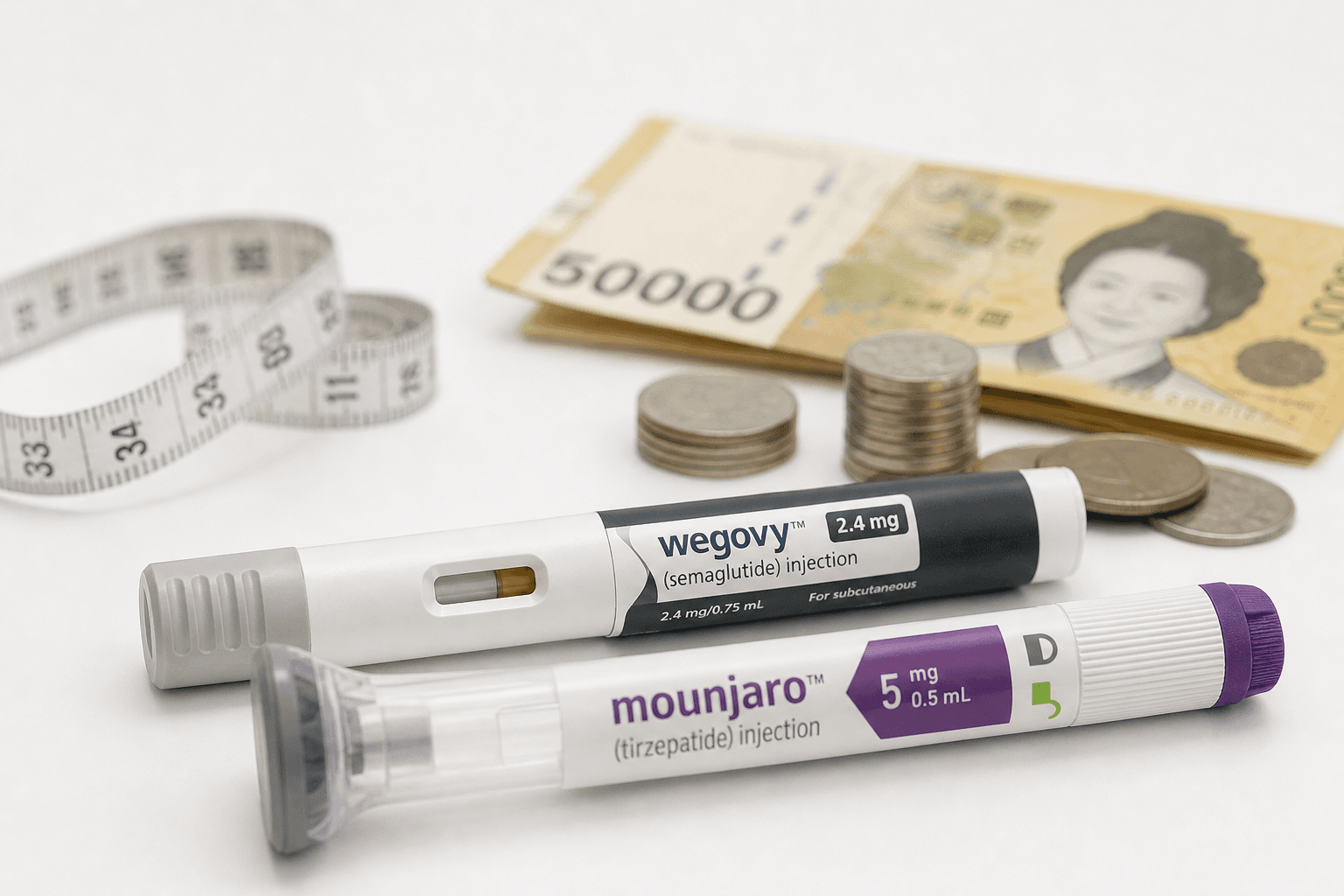
South Jeolla-Gwangju Moves to Create Nation’s First Ordinance Supporting Obesity Drug Costs

MFDS to Use AI for Vaccine Release and Process Validation, Shifting From Post-Production Testing to Real-Time Prediction
Tandem’s tubeless insulin pump wins FDA approval, with wear time of up to 7 days

‘Speed Race’ for Innovative Medical Devices Stalls at Health Insurance Reimbursement Hurdle

The ‘Valley of Death’ for Infectious Disease Treatments: Cross-Agency Coordination Is Key
Mounjaro Costs 59,000 Won in Japan, 300,000 Won in Korea, Sparking Price Debate


