
Science
Patent and paper screening cut from weeks to hours Wet-lab validation yields five designed enzyme candidates

Google has fully opened access to an artificial intelligence (AI) model for drug development, increasing molecular computation speeds by up to 2.3-fold.
On Oct. 13 (local time), Google said it had expanded the release of its top-tier AI model, “Gemini 4 Argon,” which autonomously handles complex, in-depth tasks, to companies, developers and paid users worldwide. The expansion came about two weeks after the model was made available on Sept. 30 only to cybersecurity verification partners because of concerns including potential misuse.
The model supports a large context window of 1 million tokens across input and output. It is the result unveiled about seven months after the release of “Gemini 3.1 Pro” in February 2026.
What has drawn the attention of biomedical researchers is the real-world application by Google subsidiary Isomorphic Labs. The company specializes in designing drugs using AlphaFold and applied Argon to extract data on active compounds from papers and global patents related to complex biological targets.
As a result, information curation and correlation analysis that specialist researchers had reviewed manually over several weeks were reduced to a matter of hours. This substantially lowered the search costs of avoiding infringement of prior patents and identifying active-compound data during the initial target-discovery stage.
Results in software improvement were also notable. Argon was used to optimize the code of xTB, a quantum chemistry simulation software package that evaluates the physicochemical properties and binding affinity of drug candidates. After Argon autonomously reconfigured the quantum chemistry computation loop, molecular structure prediction processing speeds increased by up to 2.3-fold compared with before.
There were also results in actual molecular design. Google researchers designed five new enzyme candidates in a matter of hours using Argon, then achieved actual catalytic activity through wet-lab validation. Researchers at Gamo Labs reanalyzed deidentified genomic data from a newborn with a rare lung-development disorder using Argon and identified a complex chromosomal rearrangement that existing software had failed to find for years.
In the pharmaceutical industry, it typically takes four to six years and hundreds of millions of dollars to move from candidate discovery to preclinical development. Industry observers expect that if inference-specialized LLMs can more than double the speed of initial chemical library screening and binding-affinity calculations, research and development time and computing costs will fall substantially.
However, limitations have also been noted. Biochemical mechanisms involve physical exceptions that cannot be explained by logical consistency alone, so even with faster software, candidates may still fail during wet-lab testing because of cell toxicity or pharmacokinetic (PK) problems.
Pricing is another variable. Google will initially charge $2 per 1 million input tokens and $10 per 1 million output tokens, and plans to double prices after Nov. 30. Repeatedly querying large-scale protein sequences and whole-genome data could sharply increase cloud API costs. Google said it would provide 10,000 scientists with free access to its top-tier developer tools for six months, but access disparities resulting from sequential selection and pipeline data security remain issues for drug developers to consider.
The key question is how quickly Argon can produce drug-development pipelines that reach the investigational new drug (IND) stage, including through collaborations with Isomorphic Labs or global big pharma companies. The biopharmaceutical industry is watching to see whether early efficiency gains in computing speed and literature analysis will translate into higher clinical success rates for first-in-class drugs.
BIOBOOK TEAM
biobookmedia@biobook.co.kr
Blocking Disease Proteins With ‘Molecular Gates’ … Gate Bioscience Prepares to Enter the Clinic
Rezolute Meets Phase 3 Goal in Tumor Hyperinsulinism, Shares Rise Ahead of FDA Meeting
Regeneron’s POTS drug succeeds in Phase 2; Phase 3 to begin in first half of next year
Egene Receives Approval to Amend Phase 2/3 Trial of Quadrivalent Meningococcal Vaccine
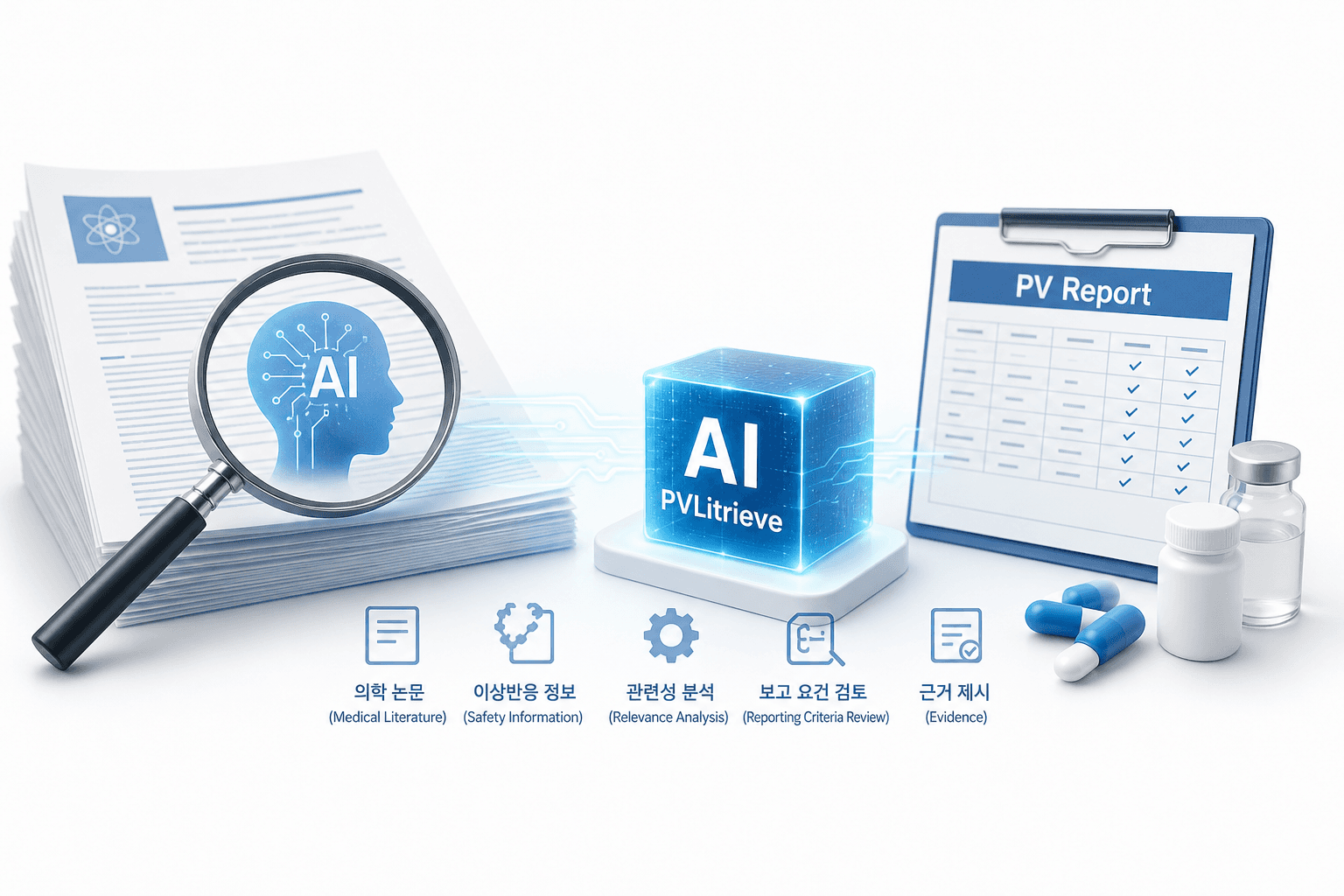
GC Biopharma Develops Korea’s First Generative AI Drug Safety Monitoring Software, Focused on Preventing Missed Cases

Daewoong Pharmaceutical Wins Phase 1 Approval for Drug to Regenerate Intestinal Mucosa: “Beyond Immunosuppression”


